
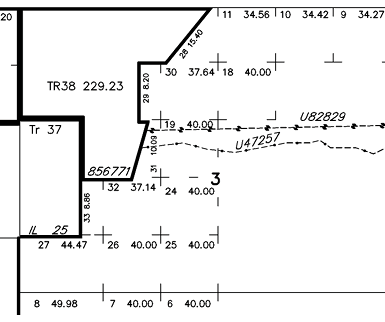
There is a specific, electric silence that hangs in the air when you’re leaning over a light table or a dual-monitor setup, cross-referencing a high-grade sampling hit with the BLM MLRS (Mineral & Land Records System) and the latest Master Title Plat. It’s the moment of the critical “check.” You’ve identified the target – the geology aligns, the historical reports hint at a missed opportunity, and the satellite imagery shows the right alteration. But in the modern West, the most critical question isn’t just “Is the metal there?” It’s “Is it open?”
With a vast patchwork of wilderness study areas, military withdrawals, railroad sections, and Homestead Act lands, there are loads of great projects that are forever tied up and “inaccessible.” For an explorer, finding true Open Ground is the professional equivalent of oxygen. It’s the wide-open door to a new project – a clean slate where your theories can finally be tested by a drill bit. In that moment, the map transforms from a messy patchwork of private holdings and withdrawn lands into a frontier again.
However, finding that open ground is becoming a more complex art form than it was even 10 years ago. When I co-founded Burgex Mining Consultants back in 2010, the “beat” of mineral exploration was steady with somewhat predictable cycles, but today it is a sprint. We have moved from a general interest in gold and base metals to a high-stakes, national security-driven push for critical minerals.
In the last decade, the landscape of U.S. exploration has shifted beneath our feet:
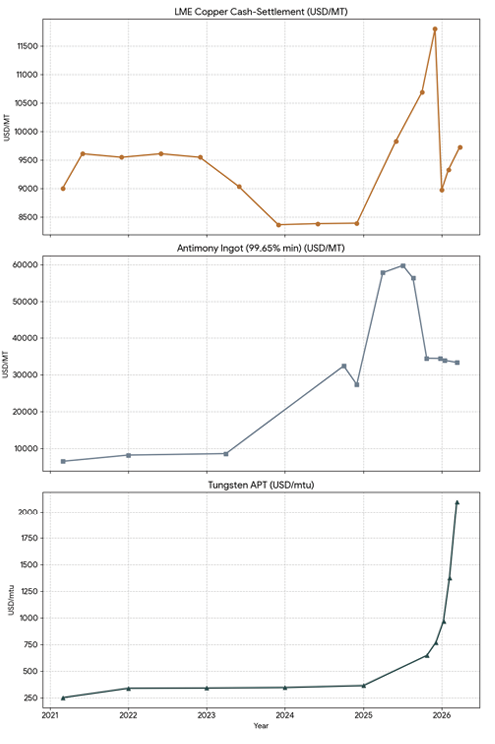
- The Critical Minerals Renaissance: Copper, lithium, germanium, gallium, antimony, tungsten, and rare earths are no longer niche interests; they are the center of a new industrial policy.
- Technological Precision: We’ve moved beyond the era of just “boots on the ground.” Today, we are GIS-integrated, using advanced land status research and mapping to find the needles in increasingly crowded haystacks. We are finding that the “low hanging fruit” on the surface has been picked; we are now looking deeper and through more complex data layers to find the next generation of deposits.
- The Shrinking Frontier: With increased scrutiny on land use and a more complex regulatory environment, the “open” in Open Ground is more precious – and harder to verify – than ever before. The margin for error in land status research has essentially vanished.
- The Administrative Bottleneck: Identifying and staking a claim block is now only half the battle. With BLM offices across the West facing severe staffing shortages, claim adjudication times have stretched to record lengths. In some states, processing times have become so backed up that they are considered indefinite, leaving explorers in a high-stakes limbo where “owning” a project on paper and having it recognized by the record is a widening gap.
I’m incredibly excited to bring an exploration-focused perspective to the pages of North American Mining. My goal with this column isn’t just to report on the industry, but to dive into the grit of what it takes to actually build a project from the dirt up.
Throughout my career, I’ve found that there is often a disconnect between the technical reports filed in a Vancouver skyscraper and the reality of the team driving stakes into the Arizona desert in July at 2:00 a.m. In the coming months, we will bridge that gap. We’ll look at the cutting edge of project generation, the evolving geology of North America, the business of junior miners raising and deploying exploration capital, and the boots-on-the-ground reality of claim staking and mapping in a complex regulatory world.
After all, in the U.S., we are still operating on the backbone of the Mining Act of 1872. It is a unique and powerful system that allows an individual or a company to secure a future based on their own discovery and grit. But that system is under constant pressure, and understanding how to navigate it is what separates a theoretical target from a viable mine. We’ll talk about the wins, the bureaucratic hurdles, and the evolving technology that helps us see what others have missed.
At the end of the day, every world-class mine in history started the same way: with an explorer looking at some rocks, drawing a map, and realizing the ground was theirs for the taking. The stakes have never been higher, and the map has never been more crowded, but the thrill of the hunt remains the same.
I’m looking forward to exploring that frontier with you.
Welcome to Open Ground.
Stuart Burgess

Stuart Burgess is the Co-founder and Chairman of Burgex Mining Consultants. A specialist in mineral exploration and landman work, Stuart has spent his career bridging the gap between geological discovery and the complex regulatory landscape of the American West.