
Ventilation-on-demand systems can deliver energy savings exceeding 20% in underground mines, but success demands more than simply bolting on a VFD.
by Jonathan Rowland
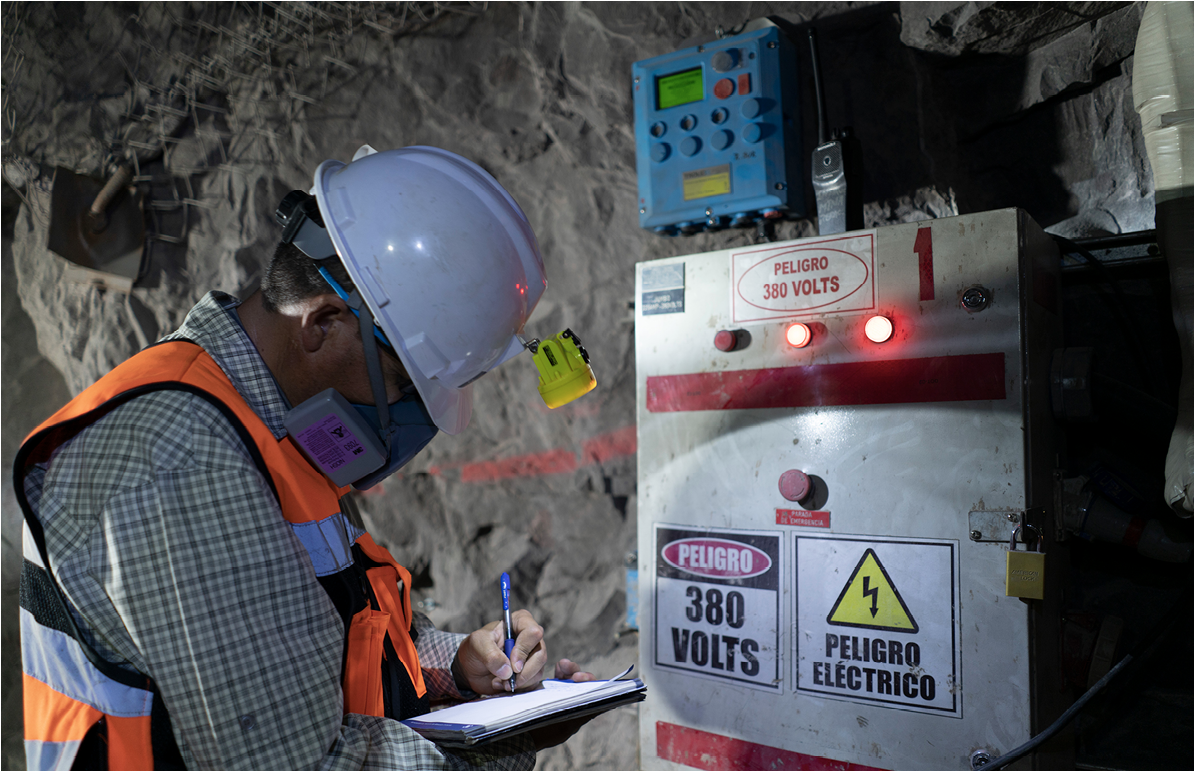
Out of sight, and out of mind: at many mines, fans run at maximum capacity around the clock, regardless of actual demand. The consequences of this approach are costly: excessive energy consumption, equipment wear, and dust generation complicate an already complex underground environment. In contrast, ventilation-on-demand (VOD) systems automatically adjust airflow based on real-time conditions, such as personnel location, equipment activity, and air quality data.
“We should look at VOD systems similarly to how we look at a thermostat,” Tanveer Jahir of Conspec Controls told North American Mining magazine. “VOD systems use air-quality stations to monitor and react to changes in the underground environment, running ventilation fans only as they are needed.”
Does this risk compromise underground safety? No – not when properly designed. “Safety must always come first. VOD does not change that; it just gives operators more control over how they deliver that ventilation,” said Todd Elswick of Paul’s Fan Company. In practice, this means that fixed values are set within the control logic for parameters such as regulatory gas-exposure limits, minimum airflow requirements in active headings, and blast-clearance thresholds.
The system cannot reduce airflow below those compliance thresholds, so when gas concentrations rise, equipment becomes active, or personnel enter a zone, airflow increases to maintain required dilution rates. On the other hand, when headings are inactive and environmental readings are stable, airflow is reduced to a predefined minimum that still meets regulatory standards. “The objective is not to cut air, but to eliminate over-ventilation of unoccupied areas,” explained Jacob Lachapelle of Maestro Digital Mine.
Ultimately, VOD can actually improve safety by providing better information, Elswick concluded. “Instead of running the entire ventilation system at full capacity all the time, the mine can direct airflow where it is needed. That approach can improve efficiency without sacrificing safety because the system is constantly watching conditions instead of assuming the worst-case scenario everywhere in the mine.”
VOD: A TOUR
So how does VOD actually work? It starts with knowing what is happening underground, then responding accordingly.
It begins with data, data, and more data
As Conspec’s Jahir summarized: “Without having instrumentation to provide real-time data on the air quality, it is impossible to understand how effective the ventilation is.”
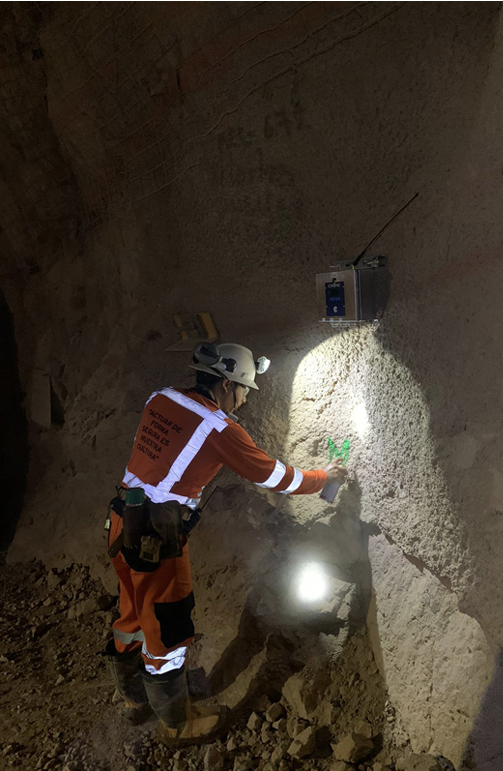
Modern VOD systems thus integrate multiple data streams, including gas, dust and silica concentrations, airflow velocity, temperature, and humidity, throughout active headings and return airways. In more advanced deployments, personnel and equipment tracking systems provide additional context by identifying where activity is occurring and where ventilation demand is reduced. “Together, these inputs establish a real-time demand profile based on actual underground conditions,” Lachapelle continued, “rather than static design assumptions.”
The mechanical enabler: variable frequency drives
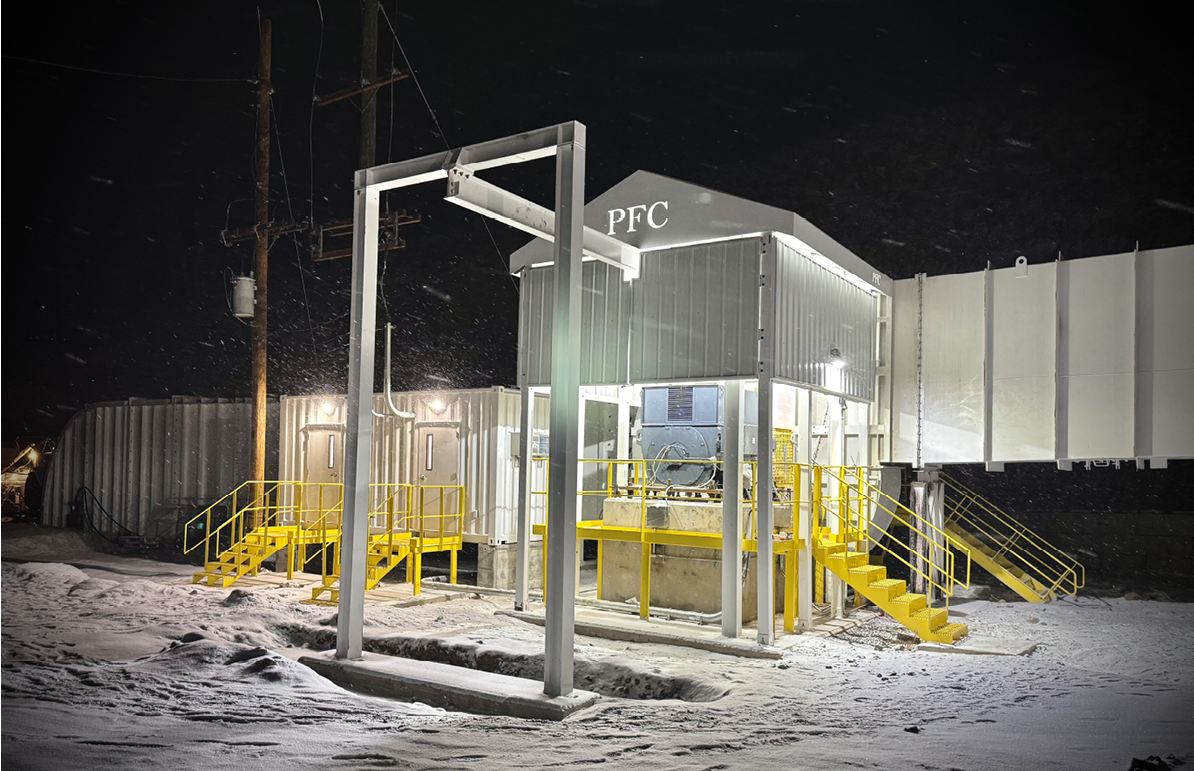
Variable frequency drives (VFDs) make VOD systems mechanically possible by allowing fan motor speed to be adjusted in response to real-time demand. As fan power consumption is proportional to the cube of fan speed, the impact on energy consumption can be dramatic. “A reduction of approximately 20% in fan speed can reduce power consumption by roughly 50% under typical operating conditions,” explained Lachapelle.
Elswick of Paul’s Fan Company put it in operational terms. “The VFD gives you the ability to change fan speed, and that is important because fan speed directly affects airflow and power consumption.” But a VFD does not magically make a fan efficient; the real advantage comes when the VFD is integrated with automation that monitors parameters such as airflow pressure, gas levels, and equipment activity underground, allowing you to operate the fan intelligently. “That is where the real energy savings come from,” Elswick concluded.
The control layer: bringing things together
Integration occurs at the control layer, where main surface fans, booster fans, and auxiliary fans connect to a communications backbone. “In many underground operations, these assets were originally designed to operate at fixed output,” Maestro Digital Mine’s Lachapelle noted. Implementing VOD thus requires interfacing with existing PLC systems, electrical starters, and protection equipment to dynamically adjust airflow.
“The automation system is centrally managed through a surface server and user interface,” added Rob Albinger of Strata Worldwide. “Data from underground sensors and instruments is continuously collected and analyzed, generating real-time alarms and location-specific notifications. The platform centralizes ventilation management while enabling remote control and manual override when needed.”
“Too often, people think you can bolt a VFD onto a fan and suddenly have a smart ventilation system. It does not work that way,” said Jim Harmon of Paul’s Automation & Controls, who emphasized the importance of a systematic approach. “VOD succeeds when the fans, the controls, and the mine plan work together.”
Communication: the limiting factor?
Of course, working together means communicating, and that requires reliable connectivity. As Lachapelle put it: “Without stable communications to fixed assets and consistent coverage in active production areas, precise ventilation modulation cannot be sustained.” But this can be a costly thing to achieve underground.
“Infrastructure costs are significant expenses at underground mines,” added Conspec’s Jahir. “The ability to use existing infrastructure can thus be a key factor in successfully implementing VOD that is cost-effective and will provide immediate return on investment.” For example, by deploying monitoring systems over existing Ethernet, WiFi, LTE or leaky feeder infrastructure, mines can allocate budget to air quality stations and fan controls rather than communications infrastructure.
STRATA WORLDWIDE’S VAC SYSTEM DELIVERS
21% ENERGY SAVINGS
A gold mine in Chile was experiencing high energy costs related to its fan ventilation system. Even though harmful gas levels would fluctuate and the number of diesel vehicles in working areas would vary, the ventilation circuit operated in a constant steady state to ensure a healthy supply of air. Daily energy output consistently measured around 1,380 kWh.
Working with its Chilean distributor Catanoor, Strata Worldwide delivered its Ventilation Automation and Control (VAC) system to fully automate the mine’s ventilation system. VAC is a centrally managed control system that automates underground ventilation in the mine. It continuously monitors air quality in underground environments using universal atmospheric monitoring systems. Based on real-time conditions and preset parameters, the system automatically adjusts fan speed or operation to ensure air quality consistently meets safety and compliance standards. By regulating fan workloads, the system significantly reduces energy consumption.
In the gold mine, the VAC system was configured to adjust primary fan speeds automatically and activate secondary fans only when needed, based on harmful gas levels, the number of people in a working area, and the number of vehicles (particularly diesel-powered equipment). Following installation, the mine reported a 21% savings in costs and energy in the first month of operation.
THE PAYOFF: BEYOND THE ENERGY BILL
Looking at the benefits of VOD, the energy savings are compelling, according to Elswick of Paul’s Fan Company, who broke down the economics. “Looking at our average customer calculations as an example, a 100-horsepower fan can easily cost around $11 per hour to operate, depending on electrical rates,” he said. “When you start multiplying that across multiple fans running continuously, the numbers get big in a hurry.” Elswick described working on a system with a 2,000-hp main fan on a VFD, which saves about $300,000/year in power costs, when the ventilation plan was followed properly.
Meanwhile, according to Strata Worldwide, a Chilean gold mine achieved 21% energy cost savings in the first month of operation following the installation of the company’s Ventilation Automation and Control (VAC) system (see sidebar on previous page).
The benefits also extend beyond the energy bill. “When fans run at full capacity around the clock, you are not only using more power; you are putting more wear on motors, bearings, belts, and fan components,” Elswick concluded. “Every revolution that fans make is wear that could have been saved for later.” In addition, managing airflow more intelligently limits dust generation, reducing the dust load on the system. Lastly, there is an operational resiliency angle, as noted by Stantec’s Paul Aho. “Suppose a mining operation has a primary ventilation system comprising two or more fans operating in parallel and running at 65% capacity. If one of the fans trips or is shut down for planned maintenance, the speed of the remaining fan(s) could be ramped up to compensate for the missing fan, lessening any effect on the operation.”
In practice, blast clearance is where many mines first see the value of VOD. “During a blast, there are tremendous levels of offgas generated, often consisting of carbon monoxide (CO) and sulfur dioxide (SO2), both of which are extremely harmful to workers,” Conspec’s Jahir added. Traditional approaches mean waiting, often for hours, before re-entering a heading after a blast. In contrast, VOD allows mines to ramp up ventilation immediately after blasting, while monitoring CO and SO2 levels as they fall. This provides a clear indication of how effective ventilation is and how quickly the air can be made safe for miners. In addition to the obvious safety benefits, the productivity impact can be significant, added Stantec’s Aho: “VOD allows an operation to adjust ventilation before or immediately after a blast, directing additional ventilation to any area where it is most needed to shorten blast clearing and enable a faster return to productive activities.”
There is an important caveat, however: “The honest truth most people do not talk about when it comes to VOD: the technology only saves money if it is actually used,” Elswick of Paul’s Fan Company warned. “We have seen operations install VFDs and automation systems and then never run them in automatic mode. The fan stays in bypass and runs the same way it always did. So, the potential benefits are real, but they depend on how the system is operated.”
GETTING VOD RIGHT: CRITICAL SUCCESS FACTORS
According to Maestro Digital Mine’s Lachapelle, there are four critical success factors for integrating VOD with existing infrastructure: infrastructure readiness, control compatibility, data reliability, and operational alignment.
- Infrastructure readiness requires assessing whether fans are equipped with controllable drives and whether regulators and doors can be actuated or monitored. “If fans are not equipped with VFDs or compatible control interfaces, dynamic airflow adjustment will be limited,” he said. “Electrical capacity, starter configuration, and protection systems must also be reviewed to ensure they support continuous modulation rather than fixed-speed operation.”
- Control compatibility requires clear communication protocols and careful mapping of control hierarchies. “A successful integration preserves fail-safe states and ensures that loss of communication does not create unintended ventilation risk,” Lachapelle explained.
- Data reliability is equally critical. “VOD depends on accurate and continuous inputs from air quality stations, airflow sensors, and, where applicable, tracking systems,” the Maestro Digital Mine expert said. “Sensor placement, calibration practices, and network uptime directly affect control accuracy.” He recommended a staged implementation approach that begins with fixed environmental monitoring and gradually incorporates activity-based control.
- Operational alignment – the fourth factor – is often underestimated. “Ventilation engineers, electrical teams, and production personnel must understand how control logic affects blast clearance timing, re-entry protocols, and development sequencing,” Lachapelle said, echoing Elswick’s earlier caveat. “VOD systems require clearly defined operating parameters, response thresholds, and override procedures.”
Meanwhile, Harmon of Paul’s Automation & Control emphasized the importance of correct fan selection from the start. “A lot of people assume you can take an existing fan, add a VFD, and suddenly you have a flexible ventilation system. But fans are designed to operate within a certain range of pressures and airflow. If that fan was not selected with variable operation in mind, you can quickly run into efficiency problems.” He recommended working with turnkey ventilation providers or experienced engineering groups who can evaluate the entire system, including fan performance, airflow demand, controls, and how the mine runs day-to-day. “When the fan, controls, and ventilation plan are designed together, VOD works extremely well. When those pieces are disconnected, the system rarely performs the way people expected.”
VOD systems deliver maximum benefit when integrated with overall mine production planning, concluded Stantec’s Aho. “When development and production schedules are set, ventilation personnel have a responsibility to review and identify any showstoppers. VOD can help resolve these showstoppers, and in many cases, enhance production opportunities.” However, the sophistication of the VOD system – remotely controlled VFDs, remotely adjusted louvers, remote airflow monitoring, gas sensors, and cameras – determines how tightly it can integrate with production schedules. Finally, “have the right people on board to make it happen,” added Aho. “Properly trained operators and maintenance personnel will make all the difference.”
On the flip side, Aho identified several common implementation pitfalls. First among these: failing to follow up after commissioning. “These are not plug, play, and walk away,” he warned. Infrastructure support is another frequent gap, as switch rooms often need to be larger than usual, kept extremely clean, and equipped with mechanical refrigeration. “VFDs work best and last longer in clean, dust-free, cool environments: conditions not easily maintained in a mine.”
Finally, Aho cautioned against an over-reliance on proprietary systems. “Beware of marketed proprietary systems and favor a system made up of tested and proven components,” he said. “Install and commission the system in stages. This may bring light to any unforeseen issues as well as any issues in the system that could be eliminated.”
“Like most things in mining, success comes down to good planning, the right equipment, and operators who are willing to follow the ventilation strategy,” concluded Elswick of Paul’s Fan Company. For mines running fans at maximum capacity around the clock, however, there is a clear opportunity, as VOD systems can deliver measurable returns in energy costs, productivity, equipment life, and safety while providing the operational flexibility modern mining demands.
MEET OUR EXPERTS
Paul Aho is a ventilation specialist in Stantec’s Mining, Minerals & Metals practice.
Todd Elswick is the president at Paul’s Fan Company.
Jim Harmon is the director of engineering, Paul’s Automation & Controls, a subsidiary of Paul’s Fan Company.
Tanveer Jahir is the international business development manager at Conspec Controls.
Jacob Lachapelle is the chief commercial officer at Maestro Digital Mine.
Rob Albinger is the general manager of StrataConnect at Strata Worldwide.