
With innovative, digital technologies proliferating in mining, an intelligent future beckons.
by Jonathan Rowland
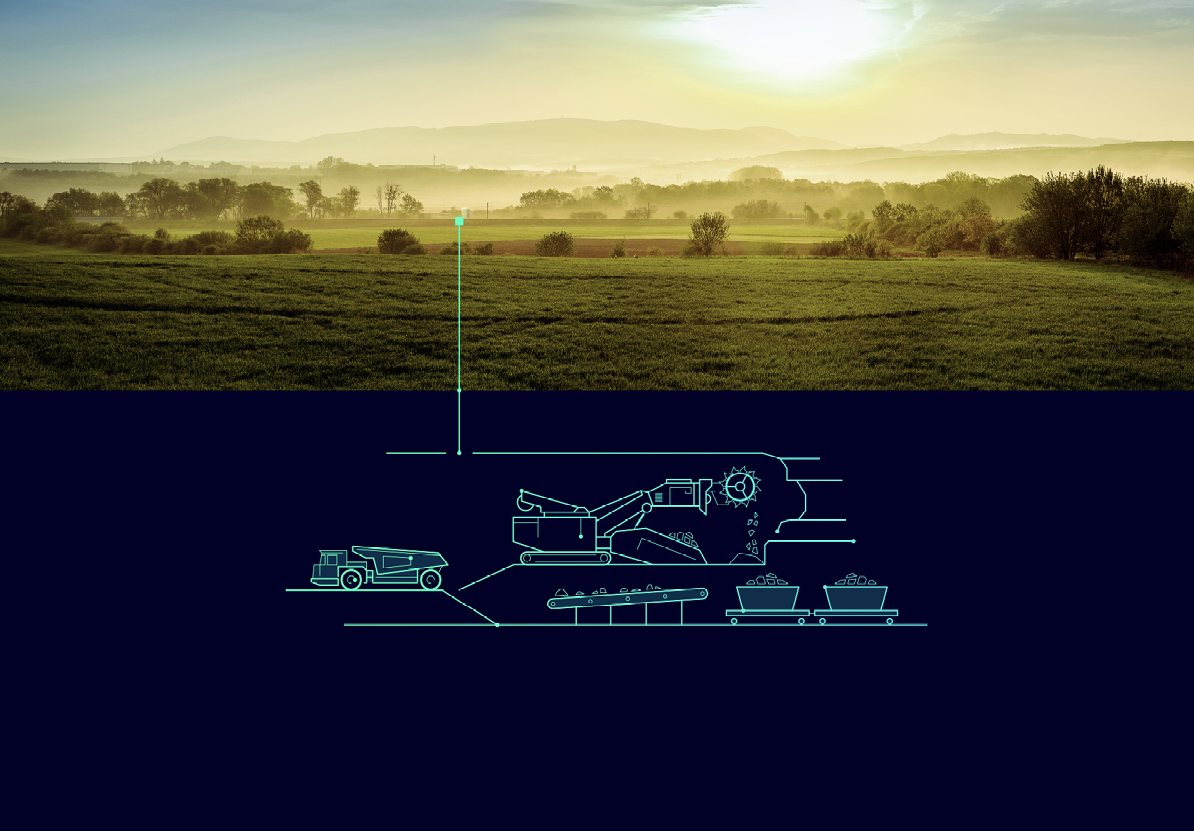
The global pressures mining operations face will be familiar to readers of North American Mining. The increasing demand for critical minerals, along with diminishing ore grades, tightening environmental expectations, the need for safer workplaces and skilled personnel, and fluctuating commodity markets, all place demands on this cost-sensitive industry. ‘Intelligent mining’ describes the industry’s response, “leveraging technologies to extract more value using fewer resources, while minimizing risk and environmental harm,” as Stephen de Kock, managing director of EYEMINE, put it.
This can go “in any direction, whether focusing on asset performance, lifecycle, maintenance, operational performance, or operational and corporate management,” said Sunny Schoone, global head of Automation and Digitalization at Innomotics Mining, a relatively new name in the mining industry, but one with an established pedigree, having been formed from Siemens’ electric motors and large drive systems business in 2023. For Schoone, the essence of intelligent mining can be summarized as delivering actionable information from field data to enhance decision-making.
The goal of the intelligent mining vision is to transform mining firms into “digitally operated mining companies,” said Siemens’ Thomas Walther. In such companies, digitalization encompasses every aspect of the value chain, from excavation to transportation, beneficiation, and storage. According to Walther, head of Vertical Minerals: “Each digitalization step offers an opportunity to optimize individual processes; however, the most significant impact comes from combining all data to deliver an end-to-end digital twin that incorporates product, process, and plant design, engineering and commissioning, and ongoing mining production.”
This foundation enables the implementation of wide-ranging software solutions and end-to-end automation, with solutions that “would have seemed futuristic only a few years ago now becoming commonplace,” Walther concluded.
Critical to realizing the intelligent mine in the real world is shifting from siloed operating models to “integrated, whole-of-mine approaches,” said de Kock, a perspective echoed by Schoone, who called cross-silo data usage “one of the greatest potentials of digitalization.” According to these experts, a mining operation that aggregates all data along the material value chain into a single point of truth can optimize in multiple directions simultaneously, including balancing optimum economic production with ESG impacts.
Products, systems, and services within the intelligent mining ecosystem should be “geared toward helping mining companies optimize their entire value chain across the whole lifecycle,” agreed Walther. This includes both horizontal “pit-to-port” integration and vertical integration between operational technology (OT) and information technology (IT) systems.
Interoperability and data integration
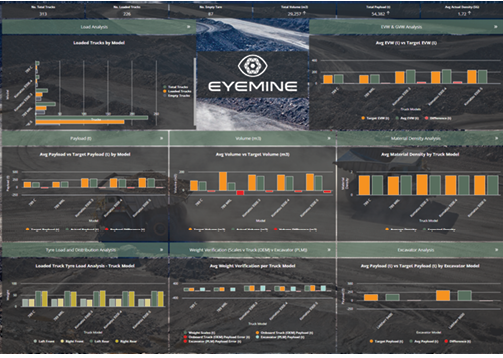
Mining operations often end up a “patchwork” of systems from different vendors, implemented at various times for different purposes, said EYEMINE’s de Kock. This “fragmented ecosystem” presents several challenges to optimizing across the mining value chain, including data silos and quality issues, operational inefficiencies, inconsistent standards, and outdated systems that lack support for APIs or standard protocols.
The “art,” explained Schoone, is to “connect all the various systems, both open and proprietary, and data sources, and harmonize into a single point of truth that makes them usable.”
Existing plants will “already have hardware, software, and processes in place, some of which will have been around for decades,” agreed Walther, who argued for the role of the end-to-end digital twin in breaking up data silos and ensuring that a mine’s digital journey is carried out based on up-to-date (digitalized) documentation and relevant operating data.
Life is a little easier in new mining projects. Early in process and plant development, a virtual production system is created to help design, simulate, and engineer process plants. “Using collaborative platforms as a basis and with complete data integration from design through to engineering and commissioning, it is possible to automatically create a digital twin for the plant, including automation,” Walther explained. This can then be used in actual production with minimal outlay, thereby saving on engineering work and reducing the time it takes to get production up and running. “The same applies to machine design, meaning engineers can assist mine operators with virtual twins from the early stages, as well as during virtual commissioning and live operation.”
When it comes to capturing data for a performance digital twin, process control systems and manufacturing operations management (MOM) are the primary sources to consider, according to the Siemens expert. This performance twin is created using the real production systems and is enriched with IoT data, enabling the optimization of production and service-critical equipment.
“Integrated working processes help ensure that a digital twin, once it has been created, is kept up to date over the remaining service life of the plant, thereby keeping the cycle between virtual and real production running without interruption,” Walther continued. “All of that, as well as the simulation of optimization scenarios and future plant designs, assists mine operators in optimizing the performance of their plants and optimally integrating their supply chains. Even suppliers and intralogistics can be integrated when using an end-to-end collaboration platform.”
Ultimately, however, success rests on the quality of data available. For Schoone, this is the “key expertise the mining industry is searching for,” noting that conversations with mining companies often start by discussing the latest AI or digital twin technology but usually end up focusing on data infrastructure. “The ‘aha’ moment comes when the mining operation realizes the foundation is proper data handling,” Schoone concluded. “Only after realizing this can you progress and add real value with the advanced digital tools available today.”
Managing the transition
In addition to interoperability and data quality, several other challenges arise when implementing the intelligent mine, including technological, financial, and regulatory hurdles. However, it is organizational challenges that loom largest for Schoone, who noted that digitalization is not just about downloading an app. “It is more about transforming working processes into digital processes and having that change accepted by the user.”
As industries navigate shifting market demands and technological disruption, it has become clear that digitalization is essential for companies determined to stay competitive in the long run.
“Across industries like mining and mineral processing, digitalization is redefining what operational excellence looks like,” the Innomotics expert continued.
“We see firsthand how intelligent drive systems, connected assets, and advanced analytics create measurable efficiencies and open new pathways for innovation. With the right expertise and commitment, digital transformation is not only achievable – it’s how the industry engineers its next leap forward.”
A significant part of managing the intelligent mine transition will be the changing role of the human operator, which will shift from “manual labor and routine operations to more strategic, technical, and oversight responsibilities, such as system oversight, data analysis, compliance, and training,” EYEMINE’s de Kock said. According to Schoone, this will likely involve teams of remote engineers who can interpret and utilize digital systems, data-based analyses, and the physical and chemical processes of mining to transform information into real-world action. However, although their roles will change, “humans will continue to play a key role in the future of mining,” the Innomotics expert concluded.
There is also an opportunity here, as Siemens’ Walther argued, who pointed out that “achieving a sustainable economy also means creating long-term and attractive mining jobs.” With mining traditionally facing an image problem in attracting talent, digitalization could help change attitudes, making it more appealing to younger individuals. “When processes are digitalized, staff can access all systems remotely, saving them from long travel times to work in a dirty, dusty, and dangerous environment,” Walther said.
Lastly, but by no means least, we must consider cybersecurity, especially as industrial cyber incidents become more frequent.
As mining operations increasingly rely on technology, cybersecurity will transition from a technical protection issue to one of business continuity and resilience.
In Schoone’s opinion, managing the cyber risk should therefore be included in the operating costs of a digital system with cybersecurity systems “constantly optimized and developed to avoid unpleasant surprises.”
Envisioning the future
“We are moving toward fully automated and autonomous systems,” Siemens’ Walther said, a conclusion that both Schoone and de Kock agreed with. This shift is happening along a spectrum from local, machine-based operation to fully automated, autonomously operating mines, with a small team onsite to oversee the plant, conduct maintenance, and undertake urgent work (although, even this onsite team will be assisted by intelligent robots and drones, added Schoone). When you reach that stage, “your mine has undergone a complete digital transformation into an intelligent mine,” concluded Walther.