
In the early 1900s, horse manure threatened to inundate urban life. That problem wasn’t solved by upgrading the horse, but by shifting to a new mode of urban transport based around the latest technological innovation: the internal combustion engine. Is the mining industry about to go through its own paradigm-shifting experience?
by Jonathan Rowland
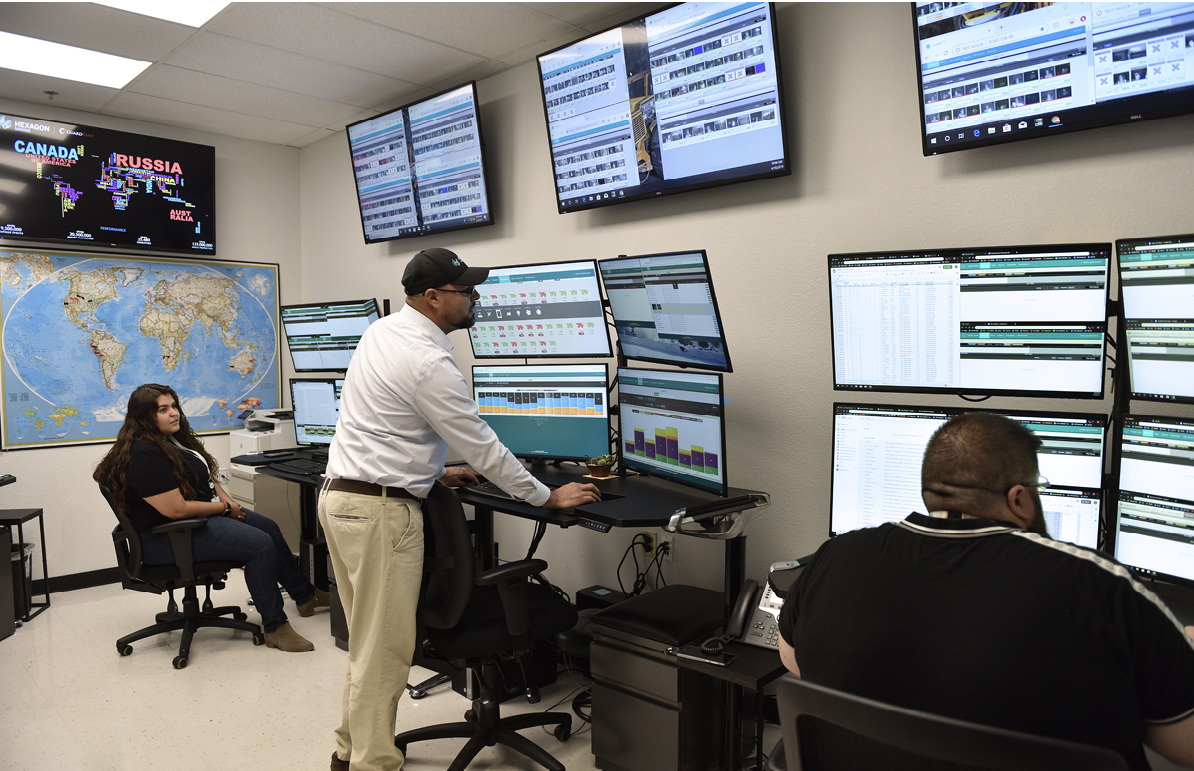
Zero-entry mining represents a radical departure from centuries of human-centric extraction practices – a moonshot project aimed at addressing many of the industry’s persistent challenges to deliver a mining industry fit for the 21st century. “A zero-entry mine is a fundamentally different archetype,” said Dr. Greg Baiden, CEO of Penguin Automated Systems Inc. (ASI), who has long worked on themes relevant to zero-entry mining, including mining robotics and automation, as well as concept development for lunar mining. “This will demand bold leadership, cross-disciplinary collaboration, and a willingness to challenge entrenched norms.”
“While technical innovation and a supportive regulatory environment are essential, history shows that each major advancement in mining, whether technological or regulatory, has required a cultural shift,” agreed Geoffrey Liggins, co-author of a recent white paper on zero-entry mining for the Global Mining Guidelines Group (GMG). “These cultural changes are often the most challenging to achieve.”
According to Liggins and GMG co-author Gavin Yeates, the intent of their recent white paper drew inspiration from John F. Kennedy’s 1962 speech: “We choose to go to the moon.” Just as Kennedy initiated an attitude shift that ultimately led to human footprints on the lunar surface, overcoming technical and other hurdles along the way, so must the industry choose to pursue zero-entry mining.
“This is not an idle ambition; it is a purposeful goal that aims at addressing many of the mining sector’s persistent challenges.” The “most critical shift” must come in the mindset of mining leaders, concluded Liggins. “The willingness of mining sector leaders to embrace the core objective – ‘we choose to achieve zero-entry mining’ – is the foundational change needed to begin this journey.”
WHY DO WE NEED ZERO-ENTRY MINING?
The underlying principle of zero-entry mining is “simple yet powerful,” said Yeates. “Every year, the mining industry experiences fatalities and serious injuries. If no one is present, then no one can be injured or killed.” In addition, zero-entry mining offers various economic and operational advantages that could be crucial in meeting global demand for minerals, while addressing the substantial financial risks and uncertainties associated with mineral extraction. “By enabling operations that do not require human access, mining can be approached with different design parameters,” Yeates explained. “This could lead to improved recovery ratios and unlock previously inaccessible resources.”
Human-free access “changes everything,” asserted Baiden.
“Traditional mine design centers on human safety, mobility, and accessibility. With zero-entry mining, these features become obsolete.”
This shift impacts mine layout, environmental footprint, extraction strategy, and even permitting. For example, removing people from the face means several major systems can be eliminated or significantly downscaled, including ventilation systems, escape routes and refuge chambers, ground support, and access tunnels and ramps. Illustrating this shift, Ben Lawrence, director of Industrial AI and Robotics at Gecko Robotics, described work at one of North America’s largest steel mills, which used drones and LiDAR to map the entire facility not for humans, but for robots. “With a zero-entry mindset, layout becomes about where robots can wander, not where humans can work.”
According to Baiden, once freed from human-centric mine design, zero-entry mines can prioritize efficiency, modularity, precision, and continuous operation, using the following:
- Micro-tunnelling and borehole access that support multiple modular access nodes rather than full-scale declines or shafts.
- Gravity-assisted layouts, such as vertical block caving or no- human-access ore passes.
- Modular extraction pods that subdivide mines into autonomous robotic cells to reduce failure risk.
- 3D mining using optimized drift geometries with narrower, shorter, and curvilinear designs that tightly follow ore zones, minimizing waste extraction and maximizing ore selectivity.
Once senior leadership commits to zero-entry mining, mine design and planning become the “most critical enablers of success,” contended Jarym Kowalchuk, head of Product, Operations and Autonomy, Mining, at Hexagon. Zero-entry principles should be “embedded from the earliest stages of the life-of-mine study and carried through every planning horizon.” This integration ensures that footprints, sequencing, infrastructure, and logistics reflect zero-entry requirements from the outset, allowing costs, schedules, and operational constraints to be optimized around this mode of operation. In practice, this means designing access, material handling systems, and maintenance facilities with no assumption of personnel presence in production zones.
Such radical rethinking from life-supporting to robotic-operational architecture has “significant cascading effects,” Baiden continued, including lower CAPEX, faster time to production, reduced environmental impact, and improved operational safety that offers to tilt mining logic in favor of underground operations. In this scenario, deep underground mining becomes “a default choice, rather than a fallback.”
Ultimately, zero-entry mines have the potential to reduce the environmental and social impacts of mining, supporting social license to operate and allowing projects to move more quickly through regulatory approvals, particularly in sensitive or remote regions. “It is not just a change in tools; it is a total reimagination of how a mine lives, breaths, and grows,” concluded Baiden.
THE JOURNEY TO ZERO ENTRY MINING: DR GREG BAIDEN
According to Baiden, the radical changes inherent to zero-entry mining will require a series of transformations across technical, cultural, and regulatory foundations.
Technical transformation. Innovation in mining has traditionally focused on mechanizing human tasks. In contrast, zero-entry is designed around autonomous systems, robotic intelligence, and remote orchestration. Key technical shifts will include:
- Robotics as the physical workforce without the need for human presence underground.
- Sensor-based geospatial awareness: Embracing embedded sensors, AI analytics, and geospatial blockchain to track every action in the absence of human observation.
- Communication and control: Prioritizing optical communication networks and edge computing over legacy SCADA-based control models.
- Fail-operational design: Systems must be built to self- diagnose and self-correct in high-risk environments without immediate human intervention.
Cultural transformation. In a zero-entry mine, the miner’s role “shifts from being in the mine to operating the mine, requiring a shift in identity, training, and organizational values,” Baiden asserted. This will require accepting a virtual presence through teleoperation, VR-based command centers, and AI-supervised fleets; building confidence in robotics and adaptive planning, particularly to handle adverse events, such as rock bursts or equipment failure; and a digital-first leadership approach.
Regulatory transformation. Current mining regulators are “grounded in assumptions of human presence and based on current mining practices,” noted the Penguin ASI executive. These frameworks must be “proactively reformed to support zero-entry mineral recovery,” including:
- Updating health and safety rules that become
redundant in a zero-entry environment (e.g., mandatory
escape routes, ventilation, and human-access protocols). - Defining digital standards around cybersecurity, remote operation, and AI accountability.
- Supporting innovation zones where autonomous mining can evolve with regulatory support and oversight rather than delay.
The criticality of interoperability
Fully autonomous systems lack the human bridge between siloed systems, making seamless intermachine communication and coordination “critical for safety, efficiency, and scalability,” Baiden said. “Interoperability is not nice to have; it is a foundational requirement for achieving safe, efficient, and scalable zero-entry mineral recovery. The future of mining is, thus, not proprietary; it is interconnected.” Fortunately, there are mining companies and OEMs that recognize that collaboration and openness are prerequisites for autonomy, with examples including:
- The development of open-interface standards for autonomous equipment by initiatives such as GMG.
- Interoperable control rooms, using vendor-agnostic
platforms to manage fleets from multiple OEMs in a
single interface. - The evolution of device-agnostic digital twins and MES systems, enabling broader integration of robotic and sensory data regardless of vendor.
- Open-source robotics and middleware (e.g., ROS for mining), particularly in research-led innovation zones.
Adapting to a reconfigured risk landscape
Zero-entry might eliminate many of the physical, environmental, and health risks associated with human presence, but it raises a new set of digital, systematic, and operational risks. The result is “not necessarily lower risk overall, but a reallocation of risk into new (and unfamiliar) domains.” These risks include cybersecurity threats, systematic failure and cascade risk, loss of situational awareness, AI bias and unexpected behavior, and technological obsolescence.
According to Baiden, addressing these risks will require:
- Cybersecurity architecture adopting defense-in-depth strategies, real-time instruction detection, and regular penetration testing and vulnerability audits.
- System redundancy and failsafe design using redundant communication channels (e.g., hybrid optical-RF links), robotics, and AI platforms that can operate in failsafe
or degraded modes when disconnected from the
command center, as well as local edge processing nodes to maintain critical functions if central systems fail. - Live digital twins to simulate, predict and visualize
operational risks in real time based on multi-modal situational awareness using LiDAR, optical, acoustic, and
seismic sensors. - Ethical and explainable AI (XAI) so that autonomous
decision-making can be audited and improved. AI should
also be continuously trained on real-world data, including edge cases and abnormal decisions. - Operational contingency planning with procedures for
manual override, off-site recovery, or partial system reboots. Cross-trained remote response teams should be able to diagnose and intervene in complex robotic systems rapidly.
Adapting to these risks raises the critical question of skills, particularly in regions with limited access to advanced technical education. “The industry must respond with agile, inclusive, and scalable training solutions,” said Baiden, “ensuring that the transition is not only technologically successful but socially and economically sustainable. Investing in people is as critical as investing in machines.”
A new mining philosophy
In considering zero-entry mineral recovery, it is “important to recognize that we are not simply automating existing processes,” concluded Baiden. “We are building a new operating system for the mining industry. The transition is not just technical or procedural, but architectural and philosophical, incorporating mines without shafts, networks instead of navels, data-driven mining economics, and swarm mining systems. This is a systems engineering revolution: one that requires new standards, metrics, and governance models.”
The scale of this transition will present ethical and social governance challenges. The industry must keep pace with these if zero-entry mining is to be delivered successfully. For example, AI and robotic systems must be auditable, explainable, and ethically governed; the benefits of automation must be equitably distributed, especially in regions where traditional mining has been a major source of employment; and communities near mine sites should be engaged and empowered, rather than bypassed. As Baiden asserted, “zero-entry mineral recovery should be a human-centered automation strategy, even in the absence of human presence underground.”
THE MOTHER OF INVENTION: GEOFFREY LIGGINS AND GAVIN YEATES
Innovation in the mining sector has “often been limited by a lack of necessity,” said Liggins, an adjunct professor at the University of Western Australia and principal engineer at Motem, who is an expert in the automation of complex systems, technology transfer, intelligent systems, and field service robotics. According to Liggins, industries that have already adopted zero-entry operations did so out of urgent need, whether to overcome unsustainable costs or to avoid hazards too dangerous for human presence. “As mining ventures into harder-to-access resources or struggles to attract the necessary talent, it may face its existential moment: one that compels a transition to zero-entry mining.”
At the same time, mining remains a risk-averse industry, which “can lead to resistance to change,” explained Yeates, a former vice president of Mine Optimization at BHP, who now works as a mining futurist at Gavin Yeates Consulting. “Maintaining the status quo is comfortable but can result in efforts that merely address symptoms of deeper business or technical challenges.”
Such resistance to change may cause some to hide behind technical barriers. However, unless a fundamental law of physics is being violated, technical challenges can be overcome. “Humanity has successfully deployed machines to operate on the surface of Mars, remotely directed from another planet. If we can do that, surely, we can develop the mining methods and technologies needed to achieve zero-entry mining here on Earth,” Yeates asserted. With its potential to transform risk profiles and unlock new possibilities, zero-entry mining should “not be feared but embraced.”
Shifts in risk
Risks would nonetheless remain. Loss of equipment or access would be a critical factor, particularly when mining in hazardous areas, such as those with high geotechnical risk or elevated temperatures. However, without human presence, these become economic trade-offs, rather than prohibitive factors. “If the potential return justifies the risk, mining in these areas becomes viable,” Yeates concluded, adding that “ultimately, no one mourns a machine.”
Other risks would be heightened, however, notably cybersecurity. After all, zero-entry mining is a system in which “every component must integrate seamlessly to function reliably and consistently,” Liggins explained.
All entities involved in zero-mining mining activities – human supervisors, fully autonomous systems, semi-autonomous systems, and teleremote operations – must share a common understanding of process orchestration and mission instructions for zero-entry mining to succeed. This extends beyond mobile machinery to include fixed infrastructure, modular semi-mobile systems, and even passive elements that possess some degree of agency.
Interoperability in zero-entry mining thus goes “far beyond simply having a shared data exchange standard among mobile equipment,” Liggins concluded. “Zero-entry mining will elevate and broaden the definition of interoperability, demanding a holistic and system-wide approach to integration. However, as devices become more interconnected, the risk of hostile actors introducing faults – either intentionally or unintentionally – grows, making cybersecurity a foundational component.” As a result:
- External access to operations should be tightly controlled and limited to only the most essential cases.
- Every connection should be scrutinized and eliminated if it does not directly support critical operations.
- Data access should be managed through secure reporting portals, reducing direct system access.
People remain central to success: Workforce and operational shifts
As seen in other sectors that have adopted zero-entry approaches, personnel “continue to play a vital role, albeit in different capacities,” said Yeates. “They are essential for preparing, maintaining, and retiring system components. Workers will support and supervise production through activities such as equipment maintenance and resolving operational ambiguities. Additionally, there will be increased emphasis on mine design, performance metrics, and coordination. While the roles of personnel will evolve, their importance remains undiminished.”
A comprehensive list of roles and capabilities required to enable zero-entry mining has yet to be defined; however, Yeates expects these will be more technical than traditional mining positions.
“As new mining methods and processes are developed and adopted, a new set of practical skills and intuitive understanding will emerge.”
Training for these roles must be developed in parallel with the evolution of these mining methods, processes, and supporting technologies. “As with any major technological shift, society will eventually reach a new equilibrium,” Liggins concluded. “For example, the transition from horse-drawn carriages to automobiles eliminated some roles while creating entirely new ones, such as the automobile mechanic, a profession that has evolved significantly since its inception.”
Meanwhile, the location and structure of zero-entry mining operations will be “influenced by cultural expectations, taxation policies, economic factors, and social license,” said Liggins. For example, remote operations centers may be located onsite, in urban areas, or follow a hybrid approach. “Technical factors, such as communication infrastructure, may necessitate local remote operations, while practical considerations might favor urban centers. Each case will be unique. Importantly, zero-entry mining does not inherently require a fly-in, fly-out (FIFO) model any more than traditional mining operations do today.”
The GMG authors also stressed that experience rolling out autonomous load and haul and drilling operations has resulted in “higher employment, not just in the mining companies, but in the broader resource industry ecosystem, as there are more service companies, retrofit technology companies, sensor companies, training and simulation companies, all employing more people.”
A FUNDAMENTAL OPERATING PHILOSOPHY: HEXAGON
In agreement with our other experts, Hexagon’s Jarym Kowalchuk told North American Mining that zero-entry mining should be viewed not as a discrete initiative but as a fundamental operating philosophy. “When zero entry is treated as just another project, it often results in a fragmented set of activities competing for resources, with many never fully implemented. The outcome is partial zero-entry adoption: isolated areas of the mine that deliver neither the full safety benefits nor the productivity gains possible from a truly integrated approach.”
When it comes to balancing the innovation required for such an approach with the mining industry’s institutional risk aversion, mining companies can “adopt a partnership-based development model,” continued Kowalchuk. “Working closely with technology providers that specialize in zero-entry challenges allows for controlled testing, phased rollouts, and rapid adaptation to site-specific conditions. By sharing the innovation burden, miners can pilot zero-entry solutions under realistic operational conditions without committing to unproven full-scale deployments. This approach mirrors the joint-venture and vendor-partnership strategies used successfully in automation and electrification projects worldwide.”
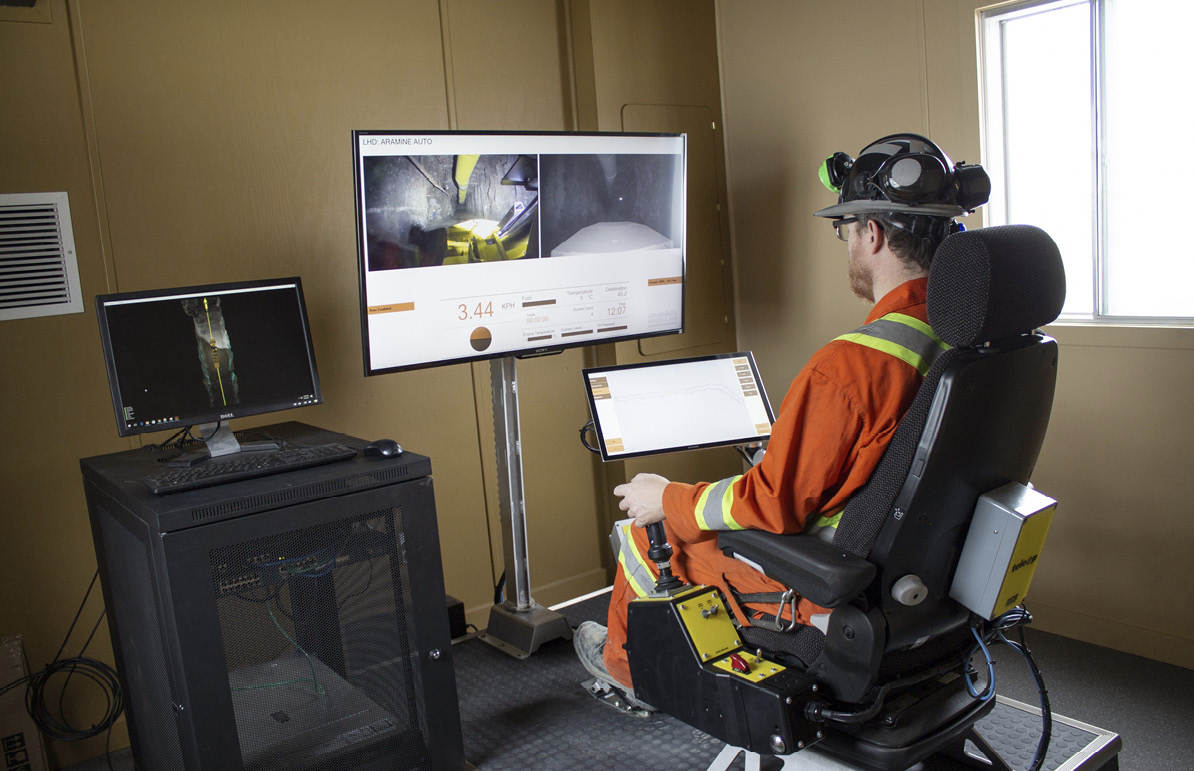
Of course, some foundational zero-entry technologies have already been proven in mining operations. According to Joe Gladu, general manager of Integrated Machine Systems at Hexagon, teleremote systems such as Hexagon TeleOP have enabled operators to safely control heavy equipment from a safe distance for nearly 30 years. “These solutions reduce the need for equipment operators to gear up and travel to their machines underground or into the pit, enabling them to operate from a climate-controlled, safe distance, away from dust, noise, and vibration,” Gladu said. “Removing people from areas of risk not only improves safety but also helps reduce non-productive time spent travelling to and from equipment, operating between shifts, and unlocks the ability to control multiple pieces of equipment simultaneously from a single operator station.”
With mining’s rapid technical evolution will come a similar evolution in the skills needed to implement and support this innovation. “Skills in mechatronics, remote operations, data science, AI, and cybersecurity will continue to dominate and grow,” continued Gladu. “Industry-led training programs and partnerships with local institutions can help build capacity, even in remote areas.”
Overall, mining should be promoted as a “next-generation industry,” Gladu concluded. “We must continue to transform the mining industry from one of technical laggards to a high-tech, future-focused sector with increasing appeal to digital-native talent. The reality of zero-entry mining will be that remote operations support work-life balance and inclusivity, removing the traditional barriers of relocation and harsh working conditions.”
Zero Entry Mining: An Exploratory White Paper
GMG’s white paper on zero-entry mining delves into many of the themes explored in this article in greater detail, serving as a roadmap to help mining companies advance toward removing personnel from mines. However, the white paper is just the beginning. GMG is working on a series of nine follow-up discussion papers that will explore critical topics, including mine design, economics, and change management. The first two of these, covering the mining process and mining methods, are now launching. These papers will be developed in parallel to spark industry-wide dialogue, foster collaboration, and identify practical pathways to zero-entry mining. To ensure broad industry engagement, GMG will host workshops, webinars, and interactive sessions, encouraging stakeholders to contribute their insights and expertise. For more on the GMG’s Zero Entry Mining project or to get involved in the discussion papers, check out its website (https://gmggroup.org/zero-entry-mining) or email [email protected].
AN INEVITABLE SHIFT: REIMAGINING THE FUTURE OF MINING
According to Gecko Robotics’ Ben Lawrence, a large chemical company recently committed to eliminating confined space entry by the end of 2026. “We’re hearing this more, as companies move away from throwing human lives where they are not absolutely necessary. In addition, the labor gap is such that there may soon not be enough humans available (or willing) to undertake these tasks.”
The choice for mining companies may therefore lie between zero-entry mining or no mining. As Lawrence concluded, “a few forward-thinking mining companies are going to embrace zero entry, and the others will risk extinction.”
It is a matter of “if not when,” said Hexagon’s Joe Gladu, summarizing the sentiment of all our experts. “As infrastructure and standards evolve, zero-entry mining is inevitable, especially in new greenfield projects and deep, challenging deposits.”
“We are confident that the mining industry will transition to a zero-entry mode of operation,” agreed Yeates and Liggins, pointing to the fact that other industrial sectors, such as nuclear power generation and deep offshore oil and gas, have already made this transition out of necessity.
“Extracting high-value minerals from orebodies that are deep, geotechnically unstable, extremely hot, or radioactive presents unacceptable safety risks,” the GMG authors continued. “To access these challenging deposits, adopting zero-entry mining will be imperative. When mining leaders are compelled by economics, safety, or operational practicality, they will shift their mindset. As a result, the transition to zero-entry mining will accelerate – and ultimately become the new norm.”
Baiden was similarly bullish: “I am highly confident that zero-entry mineral recovery will become a central pillar of the mining industry’s future, not only because it is technologically feasible, but because it is economically compelling, socially necessary, and strategically inevitable.”
The question then becomes, how can mines best continue (or start) their journey to zero entry? Gecko’s Lawrence offered this advice:
- Do not embark on your first round of projects with your worst mine. Instead, begin the journey at your best mine.
“When we begin these projects with the ‘problem children,’ the mine’s culture destroys any chance for success. Begin at
the mines where there is good culture and strong
leadership, even if it means a lower ROI on the first round. Let the all-stars build the value story first.” - Begin with a high-value problem. “Do not run a half- hearted, low-stakes experiment in the confines of an R&D lab. Go big and hold your technology partners accountable for making it a win.”
Finally, as Baiden concluded, zero-entry mining will not be the product of a single company. It will require “pre-competitive collaboration on standards and interfaces, government incentives, and regulatory reform, cross-sector knowledge transfer from industries like aerospace, defense, and autonomous transport, and educational partnerships to prepare the next generation of miners.”
“Ultimately,” said Yeates, bringing the discussion to a close, “transitioning to zero-entry mining represents a forward-looking opportunity for mining companies, equipment vendors, miners, and the broader community to reimagine mining for the future.”
Hitachi’s Path to Zero
“Behind the essential resources that fuel today’s societal developments are the miners working in some of the world’s most demanding conditions,” Mike Whitelock, director of Mining Product Support, Hitachi Construction Machinery Americas, told North American Mining. In response, Hitachi Construction Machinery has established its Path to Zero initiative, aiming for zero emissions, zero downtime, and zero-entry mines. This vision for safer, more sustainable mining marks a shift in emphasis for the company from building machinery that meets production demands to delivering integrated solutions that address broader challenges on modern mine sites, like operator or operating safety.
The Path to Zero’s zero-entry mine pillar aims to advance automation technology and remote operation. “A key component of this initiative is our Autonomous Haulage System (AHS), which is coming soon to North America,” Whitelock explained. The AHS program enables the unmanned operation of Hitachi dump trucks at surface mines. AHS supports automated navigation, route optimization, obstacle detection, and collision avoidance. “These features can contribute to safer, more efficient haulage while creating continuous workflows and harmonizing production schedules.”
When a mine combines AHS with the company’s other technological solutions, they have the potential to “increase production hours and reduce maintenance costs,” according to Whitelock. “Our LANDCROS Connect Insight app continuously monitors our mining machines for near real-time data on machine health, usage, and wear points. When this information is used alongside AHS, mine sites can ensure that their trucks stay productive by detecting issues early and scheduling proactive maintenance.”
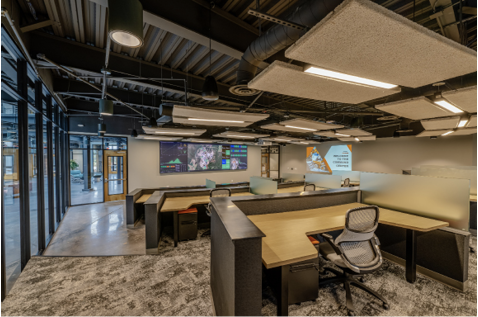
Whitelock also highlighted Hitachi Construction Machinery’s Technological Center of Excellence in Georgia, which can provide tailored support for trucks using AHS by actively monitoring the truck’s data and assessing any necessary actions. “This limits a mine’s need to have technicians unnecessarily exposed to harsh mining environments,” concluded Whitelock.
To bridge the safety gap for mines that have more complex operations and require human insight and decision-making, Hitachi Construction Machinery is also developing automation and remote-control capabilities for excavators. At the same time, future innovations are aimed at expanding the scope of zero entry across multiple machines. “Rather than compromising performance, these advancements focus on a broader movement toward smarter, more adaptable mine sites that can respond to industry challenges,” Whitelock noted.