
Merchants Fleet’s Director of Fleet Consulting provides tips to improve fuel economy for support vehicles by evaluating technologies, vehicle types, driver behavior and more.
by Tim Mundahl
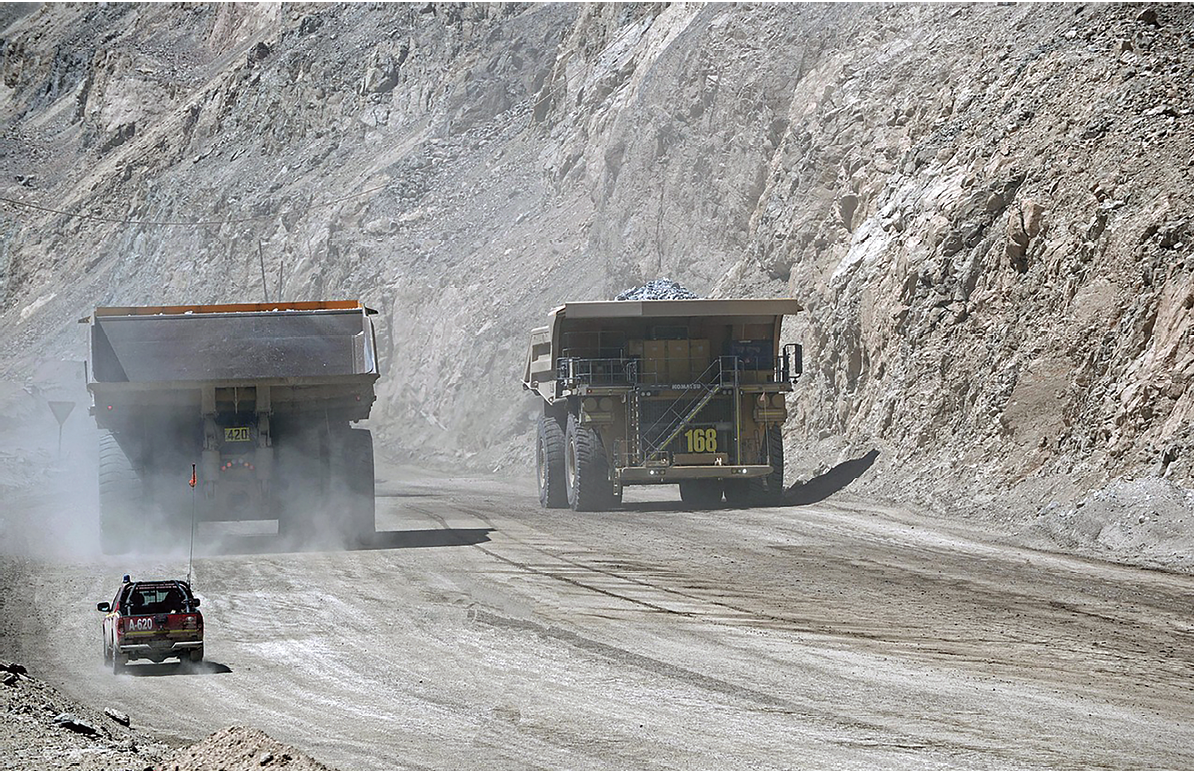
Fleet operators face ongoing pressure from volatile fuel prices and environmental scrutiny in today’s resource-intensive mining sector. While much of the attention often focuses on heavy extraction equipment, the performance of support and logistics vehicles, like pickup trucks, vans, and box trucks, is equally vital to productivity and profitability. Optimizing the fuel efficiency of these vehicles not only lowers operating costs but also enhances uptime and helps fleets meet sustainability goals.
Here are targeted strategies to improve fuel economy for service and transport vehicles used in mining operations:
1. Optimize On-Site and Support Route Planning
Although support vehicles operate outside the mine, they often traverse vast, rugged properties or haul equipment between sites. Telematics and route management tools can optimize paths to reduce travel time, idle exposure, and unnecessary detours. Routes that avoid congested or rugged paths can significantly reduce fuel burn and wear on light- and medium-duty trucks, cargo vans, and box trucks.
2. Right-Size the Vehicle to the Job
Using a heavy-duty pickup for light tool transport or a large box truck for small payloads can lead to inefficient fuel usage. Fleet managers should align vehicle specs, payload capacity, engine size, and configuration with actual job demands. Merchants Fleet can help assess vehicle utilization data to guide optimal fleet composition for mining site support.
3. Preventive Maintenance for Peak Fuel Performance
Routine maintenance is essential for engine and transmission efficiency. Clogged air filters and degraded lubricants can quickly reduce operating efficiency and fuel mileage for trucks and vans operating in dusty, rugged mining environments. Preventive maintenance programs, especially when supported by telematics diagnostics, help ensure vehicles operate within optimal parameters for fuel economy.
4. Train Drivers for Efficiency in Off-Road and On-Road Conditions
Driver behavior has a direct impact on fuel consumption. Mining fleets should provide training that focuses on smooth acceleration, maintaining steady speeds, avoiding unnecessary idling, and using cruise control when possible. Driver scorecards and friendly competition can encourage compliance and boost awareness of fuel-saving behaviors.
5. Use Telematics for Continuous Fuel Monitoring
Real-time data provides insight into which routes, drivers, and vehicles consume the most fuel. Fleets that leverage Merchants’ telematics and analytics solutions can benchmark performance across sites, address inefficient driving behaviors, and make informed decisions about vehicle replacements or modifications that improve fuel mileage.
Conclusion: A Holistic Approach to Mining Fleet Efficiency
Mining fleets must work diligently to attain fuel savings in a sector where efficiency equals profitability. Light- and medium-duty trucks, vans, and support vehicles play a critical role in keeping operations running. With a proactive fuel economy strategy that includes smart routing, spec optimization, EV integration, and data-driven decision-making, mining fleet managers can turn efficiency into opportunity.

About the author: Tim Mundahl is the director of Fleet Consulting at Merchants Fleet, provider of innovative fleet management solutions.