
America needs a secure and long-term supply of the critical mineral, and 5E Advanced Materials’ Fort Cady project is ready to deliver.
by Paul Weibel
The world is in the midst of a rapid industrial transition. Energy systems are being rebuilt for decarbonization and bolstering American infrastructure. Defense spending is rising across the Western world as military capabilities modernize for a more complex geopolitical era and reshoring critical and strategic materials is accelerating as the U.S. and its allies work to protect supply chains from disruption Importantly, none of this is possible without the right minerals.
In recent years, “critical minerals” has moved from specialist jargon to mainstream headlines, with rare earths, lithium, cobalt, nickel, and graphite dominating the conversation. These materials have captured policymakers, capital markets, and the mainstream media. Yet one equally vital mineral remains largely overlooked – boron.
Quietly, boron enables many modern-day technological applications and facilitates operating life as we know it today. It strengthens solar panel glass, improves battery performance and durability, creates a safer nuclear reactor by absorbing neutrons, and creates the lightweight hardened armor that protects American troops. In aerospace, boron-based composites boost performance by reducing weight; in agriculture, boron fertilizers enhance crop yields and resilience; and in medicine, certain boron compounds show promise in cancer therapies. These are not niche uses; they are core functions in industries attracting billions in capital and driving the technologies of the future. Boron is officially designated as a critical material by the U.S. Defense Logistics Agency and features on the EU and U.K. critical minerals lists.
Boron’s economic footprint is broader than most realize. Every new gigawatt of installed solar, every commissioned advanced defense application, and every next-generation EV battery increases demand for boron. An electric vehicle on the road relies on 40–50 kilograms of boron materials and in many applications, there is no substitute, making access to a secure supply chain a matter of both national security and competitive advantage.
The challenge here is not demand, it’s supply. The global boron market is effectively an oligopoly – 65% controlled by Türkiye’s Eti Maden and 20% by Rio Tinto’s U.S. Borax (whose California reserves were hit with a downgrade in 2018). More recently, Turkish producers redirected supply to Asia for higher prices, while China dominates downstream processing. This leaves the U.S. exposed to supply insecurity at a time when demand is accelerating. This concentration creates vulnerabilities similar to those already seen in rare earths and lithium. Analysts expect demand to rise sharply over the next decade, but supply growth is constrained by the scarcity of large, high-grade deposits. Without action, U.S. manufacturers risk exposure to price volatility, export restrictions, supply disruptions, and geopolitical risk.
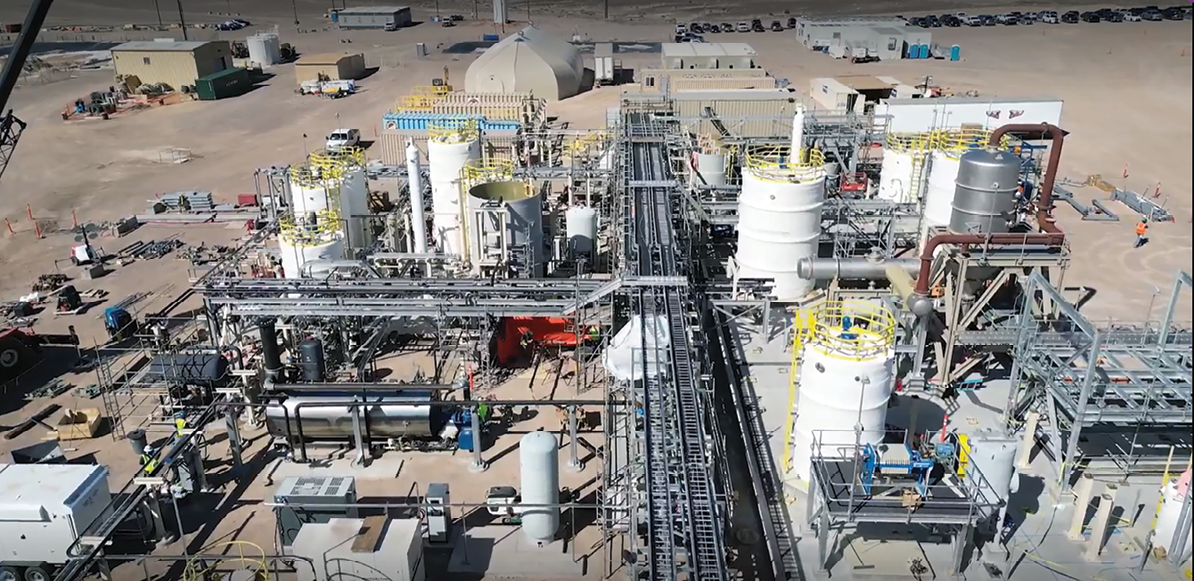
This is where 5E Advanced Materials’ Fort Cady project stands apart. Located in California’s Mojave Desert near the town of Newberry Springs, Fort Cady is the only large-scale boron deposit under development in the United States and the largest new conventional resource outside Türkiye. A rarity in today’s mining landscape, 5E has demonstrated its ability to produce boric acid to stringent industry specifications, has been mining for the last 19 months, and is poised for rapid and de-risked efficient scale-up. Its unique colemanite geology enables low-impact in-situ mining, a closed-loop process that minimizes surface disturbance, regenerates raw material feed, and yields valuable byproducts. A favorable and recently released technical report points to an initial 39.5-year mine life reserve, and the Phase 1 plant is expected to deliver 130,000 tons of boric acid annually, equivalent to about 11% of today’s global boric acid demand, offering both security of supply and long-term economic value. Additional economic benefits to the local community will have a meaningful impact.
Boron’s role in energy storage, advanced materials, and national defense makes it a perfect fit for today’s industrial and policy priorities. The project aligns with ESG objectives, strengthens domestic supply chains, and enhances America’s position in the global race for advanced manufacturing leadership. The Department of Homeland Security has already designated Fort Cady as critical infrastructure, underscoring its strategic importance.
Corporate demand for domestic sourcing is also accelerating. Major manufacturers are under pressure to meet resiliency targets, qualify for federal incentives, and respond to shareholder demands for supply chain transparency. Public and private interests are aligned: America needs a secure and long-term boron supply, and Fort Cady is ready to deliver. To get there, we must focus on three key priorities:
- Recognition: Industry, investors, and policymakers must fully grasp boron’s strategic role and future growth trajectory.
- Investment: Capital must flow into scalable domestic projects to bring new production online.
- Integration: Boron supply chains must be embedded into broader critical mineral strategies for energy, defense and manufacturing.
The alignment of market demand, strategic necessity, and a readily available domestic project is rare in mining. Boron, and Fort Cady in particular, sit squarely in that sweet spot. The U.S. has a window to secure a resource that is both commercially compelling and strategically vital.
The time to take action is now.
About the author: Paul Weibel is CEO of 5E Advanced Materials, Inc.