
IWT talks to North American Mining magazine about how to apply communications and tracking underground to maximize its inherent life-saving potential.
In underground mining environments, every decision made before, during, and after an incident can mean the difference between a close call and a tragedy. Wireless mesh networks offer a significant leap forward in safety by enabling voice communication and precise, real-time miner tracking, but the full value of a system is only realized when mine personnel align their behaviors and protocols to support its proper and consistent use.
Embracing real-time capabilities
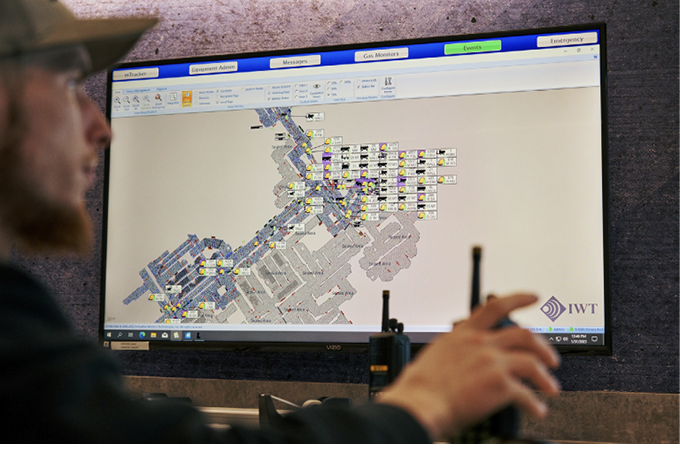
The first step in improving underground safety is fully adopting wireless communication and tracking systems that offer real-time capabilities. Legacy systems often fall short – delayed data, limited range, and lack of location precision can impede timely rescue efforts. However, systems like IWT’s Sentinel can eliminate these gaps by providing seamless communication between miners, dispatch, and emergency personnel.
More importantly, it offers live tracking so that in the event of an accident, responders can immediately identify the injured worker’s location and determine the quickest route in and out of the mine.
Mine operators should integrate this technology not just as an upgrade for production purposes, but as a foundational part of their safety culture. That means ensuring that miners are thoroughly trained on its use and understand its role in emergency response.
Promoting device accountability
One of the most impactful behavior changes is fostering a culture where miners never disable their handsets. On a Sentinel handset, tracking is built in, offering a second line of protection.
While it may seem harmless to detach an antenna or throw it in a lunchbox, don’t disable the lifeline; doing so undermines the very system designed to protect workers.
In multiple real-world incidents, lives have been saved because responders could pinpoint an injured miner’s location, dispatch nearby assistance, and clear a rescue path in minutes. None of that would be possible if the miner’s device were offline. Operators should establish clear policies and accountability measures to ensure miners keep their devices on throughout their shift.