
Production hoisting systems are increasingly being pushed to and beyond their design limits. But the biggest throughput losses are rarely mechanical; they’re operational.
by Jonathan Rowland
All the familiar pressures of modern mining – deeper orebodies, rising production targets, tighter margins – converge underground on the shaft. Any interruption here translates directly into lost output. “The shaft and hoisting equipment are arguably the most critical link in connecting the orebody to the market,” Josh Phillips of FKC – Lake Shore told North American Mining. “Thorough planning from initial system layout and design to ongoing operations and maintenance practices is key to delivering reliable long-term shaft operations.”
At the same time, production hoisting is increasingly being pushed towards its operating limits, and in many cases beyond the original design capacity, as noted by Francis Lacasse of ABB Process Industries. This means hoisting more material, more consistently, and with less tolerance for disruption.
“Sustaining elevated performance cycle after cycle puts pressure on every part of the system: higher suspended loads, tighter cycle times, and greater demands on mechanical and electrical components,” he said.
Under these conditions, reliability becomes paramount. “Demand is heavily tied to ensuring the system operates continuously at optimum capacity,” said Martin Lepage of Cementation, “placing significant pressure on planned and preventative maintenance.” It is a theme that runs throughout: the gap between design and delivery is as much about operational discipline as it is about engineering. Closing it requires attention to every stage of the hoisting cycle.
THE THROUGHPUT EQUATION
At its simplest, hoisting throughput is a function of three variables: payload per cycle, hoisting speed, and total cycle time. “Cycle time is driven by acceleration and braking profiles, time spent in the creep zones, loading and discharge efficiency, and any delays in shaft traffic, maintenance operations, and unplanned downtime,” explained ABB’s Lacasse. “Depth further influences performance by increasing travel times and rope mass.”
Behind these headline variables sits a longer list of parameters that set the theoretical ceiling: shaft diameter, hoist type, available power, drive and control technology, the guide system, and the material-handling infrastructure. These may have been decided upon years or even decades ago, as FKC – Lake Shore’s Phillips emphasized, and are not easily revisited. “While a larger shaft could handle larger components, it may be cost-prohibitive, making the project financially unfavorable,” he noted.
A particularly common issue, noted Cementation’s Ryan Payne, is a lack of adequate surge capacity on either side of the hoist. In many operations, buffer storage may amount to only a few skip loads. “Without sufficient buffering, the hoist becomes tightly coupled to the rest of the material handling system and must stop whenever another part of the process experiences an interruption,” he explained.
Phillips agreed, noting that some forward-looking operators have invested in underground bunker storage to decouple the hoist from upstream variability. “
While underground construction is expensive, the operator should be able to determine whether it would be advantageous to install a bunker system to offset the loss of conveyance,” he said. “Having systems that are not wholly dependent on mechanical availability could pay dividends for the overall mine throughput.”
Changes in ore grade are a less obvious but increasingly common throughput constraint, Phillips continued. As reserve quality declines, more raw material must be hoisted to yield the same amount of saleable product. The effect is a quiet erosion of the margin between hoisting capacity and production demand. Hoists are also frequently run below their design envelope to manage other risks, such as shaft guide alignment, further narrowing the available headroom, added Lacasse.
OPTIMIZING THE CYCLE
The cycle itself is straightforward in principle: the skip is loaded underground, hoisted to the surface, dumped, and returned empty to be loaded again. “Ideally, when the skip returns, a bin is preloaded to allow the skip to be filled by a controlled deluge of ore, properly metered to ensure the correct tonnage is loaded as quickly as possible,” described FKC – Lake Shore’s Phillips. Synchronizing loading and dumping – including the acceleration and deceleration profiles as the skip approaches each zone – can yield considerable savings in cycle time.
In practice, however, each stage presents its own friction. Loading efficiency is critical but often under-studied, noted Cementation’s Lepage. In many hard-rock operations, material sizing is performed at the surface due to the high cost of underground crushing infrastructure. Skips frequently handle large lumps that can slow loading and disrupt the planned cycle. “The design of the loading pocket chute and its interface with the skip bucket opening must be carefully evaluated to ensure the loading time assumed in the hoist duty cycle is achievable,” he said, recommending validation through discrete element method (DEM) flow analysis where possible.
At the discharge end, systems must enable rapid and complete emptying. “Any restriction to material flow introduces delays and variability to the cycle,” noted ABB’s Lacasse. Phillips also highlighted downstream disruptions: a conveyor going offline, for instance, can cascade back through the system unless adequate surface buffer capacity is built into the design.
Skip sizing itself involves a series of trade-offs. Increasing payload per cycle is an obvious route to higher throughput, but larger skips increase the total suspended mass. This affects rope safety factors and may require modifications to the headframe and shaft, Lacasse observed. Phillips added that the skip body must be designed for a range of material densities rather than a single figure: too much freeboard results in dead weight being hoisted when denser material is loaded, wasting power and reducing throughput. Liner selection is another consideration, as the material must withstand both impact during loading and abrasion during flow. The choice depends on the specific ore characteristics and the operator’s maintenance philosophy.
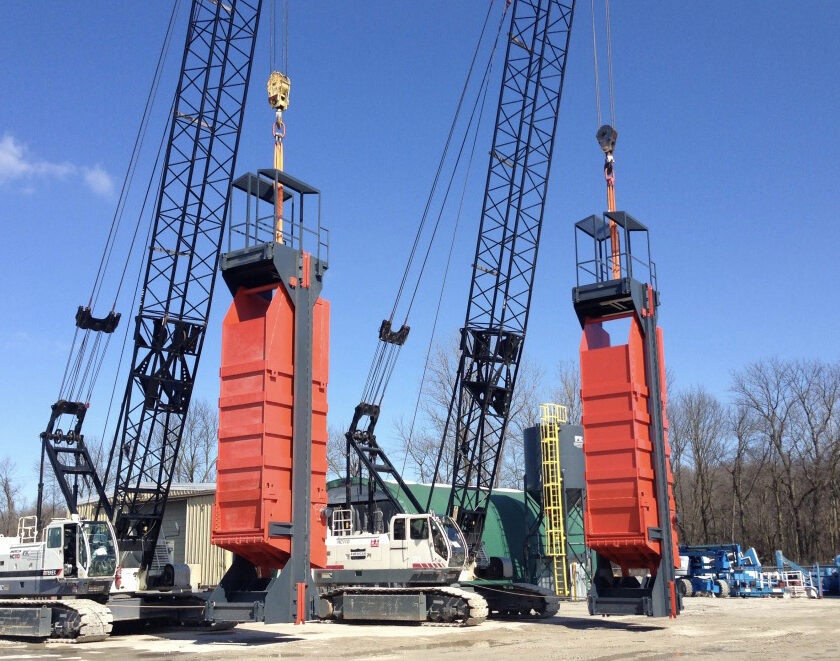
FKC – Lake Shore’s patented JETO skip addresses several of these concerns by incorporating a mechanically actuated dump that uses a scroll plate to open the body and allow material to flow freely into the discharge chute. “Designed for fast, clean discharge, JETO skips use balance and weight distribution to minimize dead weight and reduce strain on shaft guides and hoist ropes,” said Phillips. Available in capacities up to 60 tons, the skips are built to accommodate variable material conditions – an important consideration given the trade-offs around density and freeboard discussed above.
Ultimately, Lacasse concluded, the key trade-off is between payload and cycle frequency. “Increasing load weight per trip can reduce overall throughput if it slows the cycle or introduces variability,” he said. “Optimization comes from treating skip size, loading, and discharge as a single system, designed to deliver consistent, high-frequency cycles.”
MANAGING SHARED SHAFTS
In many underground operations, the production hoist shares its shaft with service duties, moving personnel, equipment, and supplies. Protecting production throughput in this environment requires deliberate planning rather than ad hoc negotiation between competing demands.
The most effective solution, where feasible, is physical separation. Cementation’s Lepage noted that a properly designed headframe and shaft steel layout, including a brattice partition between production and service compartments, can eliminate most, if not all, scheduling conflicts. Where full separation is not possible, structured scheduling becomes essential.
“By defining clear production windows and grouping service activities into planned intervals, you can reduce random interruptions,” said ABB’s Lacasse.
Personnel movement is a particular pressure point. When the primary cage shares the shaft with the production skip, crew changes become a direct competitor for hoisting time. Phillips suggested that a double-deck cage can reduce the number of trips required per shift change, though retrofitting one may require reconfiguring the headframe or sump at the station level.
Phillips also noted that, when the shaft is vertically integrated, it is generally not safe to work at the station level as equipment is being staged at the surface for lowering, unless protective provisions are in place. “A protective shaft cover could be a wise investment, allowing a crew to perform maintenance underground while another crew is loading a deck at the surface,” he said.
Lacasse added that real-time traffic management systems can further improve coordination by providing visibility of conveyance position, loading status, and demand. This allows operators to optimize sequencing and reduce idle time. The goal, he emphasized, is not to eliminate operational flexibility but to ensure that service requirements do not disrupt the production hoisting rhythm.
MAINTENANCE AS A THROUGHPUT STRATEGY
A thread brought up by every contributor is the inseparability of maintenance and throughput, particularly as systems age and experience the wear and environmental degradation that follow. “It is inherent to push systems to the design limit,” acknowledged FKC – Lake Shore’s Phillips, “but we must appreciate that as something ages, it may need to be derated, inspected more frequently, and monitored for any change that could impact its operation.”
Performance is thus inextricably linked to reliability, placing increased emphasis on planned and preventative maintenance, added Cementation’s Ryan Payne. Yet, in Payne’s experience, maintenance is often overlooked as operations prioritize short-term production and ignore long-term pain.
The broader question, Phillips observed, is one of maintenance philosophy. Some operators seek to maximize component life to control operating expenditure; others will sacrifice remaining life to reduce downtime. “Either approach can work based on the market, conditions, and company philosophies,” he said. “An answer may make sense today, but is wrong the next time the same situation is presented.” What matters is that the decision is made deliberately, and informed by data and a full understanding of the system, rather than being made by default under pressure.
Drilling into some specifics, the FKC – Lake Shore expert argued that an operation’s spares strategy should begin during the design phase itself. “It may be feasible to set standards for specific items to maintain compatibility, such as motors and sheave clusters, where one spare could be utilized for multiple systems in the event of a failure,” he said. This reduces critical inventory requirements while mitigating the risk that long lead times on specialized components will prolong unplanned downtime. Having spares on hand provides the flexibility to schedule a component change, send the removed part for rebuild, and keep the hoist running, rather than being forced into a reactive decision under production pressure.
ABB’s Lacasse reinforced the point from a supply chain perspective, noting that delays in maintenance, spare parts availability, or system upgrades can directly affect throughput. “This is driving increased focus on lifecycle planning, supply chain resilience, and the ability to respond quickly to operational issues,” he said.
LOOKING AHEAD
One area attracting growing attention is rope technology. Hybrid composite ropes offer high strength with reduced weight, as a potential step change. By reducing the proportion of the hoist’s capacity consumed by the rope itself, these materials could liberate more payload capacity without requiring larger hoisting systems. Cementation’s Lepage noted, however, that significant challenges remain before synthetic or hybrid ropes are ready for widespread adoption.
On the equipment side, Lepage argued that the North American preference for “one skip, one rope” drum hoists will increasingly give way to Blair multi-rope (BMR) configurations as mines pursue larger payloads at greater depths while maintaining the need for multi-level hoisting. “This is a well-known and mature technology for large service cages that can be more widely adopted for skips today,” he said.
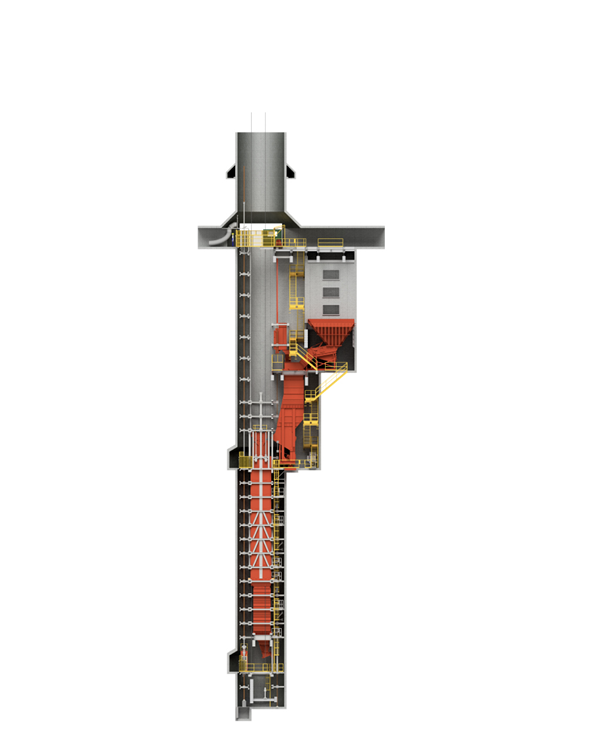
Phillips, meanwhile, highlighted vertical conveyor belt technology as an advancing alternative. “These systems have proven to require less maintenance overall and could offer additional savings in the long run,” he said, noting that both CAPEX and OPEX are generally lower when the application is suited to the technology.
The next step-change is unlikely to come from any single breakthrough. “Shaft and system design need to be considered as one,” ABB’s Lacasse concluded. “Improvements in automation, real-time optimization, and predictive analytics will allow hoists to operate closer to their design limits with greater consistency – but only when combined with mechanical innovation and integrated system design.” The pressures on the shaft are not going away. But the tons are there to be won, not through any single intervention, but through the disciplined accumulation of marginal gains across the entire hoisting system.
MEET THE EXPERTS
Andy Cook is the Electrical Director at Frontier Kemper Constructors, Inc.
Francis Lacasse is the Cluster Manager for Mining and Materials in North America at ABB Process Industries.
Martin Lepage is the Senior Technical Lead Engineer for hoisting at Cementation.
Ryan Payne is an assets executive at Cementation.
Josh Phillips, PE, is the General Manager at FKC – Lake Shore, a division of Frontier Kemper Constructors, Inc.
HOW DIGITAL TOOLS ARE RESHAPING HOIST PERFORMANCE
For more than a century, hoist performance was judged on a narrow set of metrics: average cycle time, availability, and total tons hoisted per day. “If those numbers looked acceptable, the hoist was assumed to be doing its job,” said Andy Cook of Frontier Kemper Constructors, Inc. Digital monitoring has upended that assumption. For example, as Martin Lepage of Cementation noted, payload monitoring systems and load cells now allow operators to verify material density assumptions and ensure skips are filled to optimal capacity. Newer technologies, such as AI-based LiDAR and camera systems, provide more accurate volumetric measurements than simpler sensors like ultrasonic devices.
Modern systems can thus decompose each cycle into granular events. “Instead of asking how fast the hoist is running, operations teams can ask where they are losing time, and how often,” Cook explained. This shift in perspective routinely reveals that throughput losses accumulate through small delays—one to ten seconds at a time—that repeat across thousands of cycles: waiting for ore to fill the loading pocket, conservative braking curves that no longer reflect actual conditions, or operator-controlled hold times that go unquestioned.
The primary contribution of automation, Cook argued, is to improve consistency. Advanced control systems dynamically manage acceleration profiles, braking sequences, and conveyance positioning with greater precision than manual or legacy schemes. This allows shaft systems to operate closer to their true limits while maintaining safety margins. Equally important, automated skip loading and discharge sequences eliminate human variability, ensuring consistent timing regardless of operator, shift, or fatigue. “In practice, many operations see only modest single-digit reductions in nominal cycle time,” he observed. “The real gains show up in utilization increases of 10% or more, as non-productive variability is steadily eliminated.”
Some operations are extending this visibility beyond the shaft, integrating hoist data with loading, dispatch, and processing plant systems. When viewed as part of an end-to-end production chain, it often becomes clear that the hoist is where upstream and downstream inefficiencies finally become visible.
The next frontier is the digital twin. Continuously updated with live sensor data capturing stress, vibration, temperature, and electrical performance, they support two powerful applications. First, predictive maintenance: identifying conditions that degrade performance long before alarms or failures occur. For instance, subtle brake drag or rope imbalance may not stop a hoist, but they can add seconds to every cycle for weeks at a time. Secondly, digital twins allow engineers to test control strategies, loading logic, or mechanical upgrades virtually before implementation, reducing risk and accelerating optimization without interrupting production.
Despite the maturity of the technology, adoption remains uneven. ABB’s Lacasse noted that only around 16% of mining operations currently use continuous predictive monitoring. Large, deep-shaft operations in gold, copper, potash, and platinum were the earliest adopters, as even marginal improvements deliver substantial returns. Mid-tier and brownfield operations often have monitoring systems installed but use them only for maintenance or compliance. Smaller operations and aging shafts remain heavily dependent on legacy control systems and operator logs.
Across all tiers, however, hardware and software are no longer the limiting factors, as Cook concluded. “The tools to measure every second, identify every delay, and model every improvement already exist,” he said. The barrier is organizational readiness: data literacy, clear accountability, and the discipline to act on insights that challenge long-held assumptions. “The most successful operations treat hoist data not as a maintenance artifact, but as a core production management system.”