
How better ground intelligence can help U.S. mining lead in the age of AI
by Céline Gerson
Generative AI is reshaping global priorities and igniting intense competition between companies and across nations. Yet this data-driven revolution rests on a fundamental truth: it cannot exist without mining. The race to secure essential raw materials is as consequential as the technology itself.
Chips, servers and the electricity that powers them all depend on a steady supply of minerals like gallium, copper and cobalt. As the United States pushes to lead in the new digital landscape, developing these resources at home is not just a strategic imperative, it’s a once-in-a-generation opportunity for the mining industry.
Currently, the U.S. depends entirely on imports for 12 of 50 critical minerals and is more than 50% import-reliant for another 29. That level of exposure creates serious supply chain risk as demand increases across sectors, including renewable energy, defense and aerospace.
Recent federal actions on permitting reform and trade protections are designed to address these vulnerabilities and lay the foundation for a more resilient supply chain. Now, it’s up to the industry to turn that foundation into progress.
Scaling up for the age of AI
Mining has long powered American progress, from gold fueling westward expansion to coal driving the industrial revolution. Today, AI elevates the strategic importance of critical minerals, calling on the industry to scale up with speed and care.
That’s easier said than done. On average, it takes nearly 30 years to move a mining project from discovery to production in the U.S. While permitting reforms may help shorten timelines, other constraints remain. Chief among them is limited visibility into ground conditions early in the project life cycle.
This isn’t a challenge unique to the mining industry. Nine out of 10 major capital projects miss time and cost targets because early decisions rely on ground samples representing less than 1% of the volume, influencing engineering outcomes.
When these narrow, vertical snapshots are treated as representative of much larger areas, the result is uncertainty, overdesign, and time-consuming, costly surprises. Each week of delay can erode project value by tens of millions of dollars, deterring investment and compounding risk.
The case for better ground intelligence
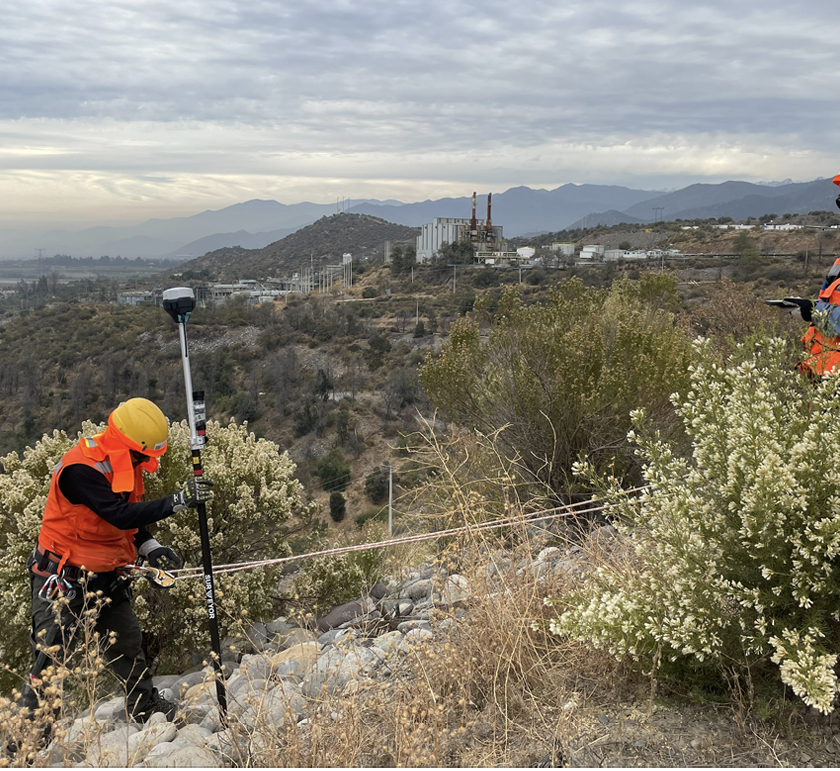
A more effective approach is available. It starts with a quick, low-impact scan of the ground using passive seismic data, which captures vibrations from natural and human sources to reveal key geological features such as faults, soft soils, and buried channels.
Insights from this early screening method allow teams to target traditional soil testing where it matters most, confirming subsurface conditions with confidence. Using AI, these datasets can then be integrated into a detailed 3D digital twin of the subsurface, providing engineers with dependable clarity for early decisions and enabling outcomes that mitigate risk and keep projects moving forward.
On a major stormwater management initiative, early screening compressed site investigation time by more than 50%, delivering a granular view of the subsurface in days rather than weeks. That clarity supported better-informed design decisions and helped control costs.
In mining, the same strategy produced a ground stiffness model for a legacy tailings facility, mapping depths beyond 100 meters to show stratigraphic variations. Closely matching conventional soil tests, the approach can reduce drilling and other intrusive work by up to 70%, for faster, safer project delivery while improving understanding of ground conditions.
These examples point to a future where ground intelligence is no longer a bottleneck but a catalyst – helping projects start with clarity, move at speed, and deliver value throughout the full life cycle.
An opportunity to lead
Securing a scalable supply of critical minerals is essential to powering the AI technologies of tomorrow. While many external factors influence execution, the mining industry has the ability to act now by applying the data solutions already at its disposal.
Deploying ground intelligence across the full life cycle of mining projects is one of the most immediate and impactful steps available today. It accelerates development, improves safety, and builds confidence in domestic supply.
This is a moment to lead with precision, reduce risk, and unlock the resources that will enable innovation for decades to come. If the U.S. is to compete in the AI era, we must start from the ground up.
About the author: Céline Gerson is Fugro’s president and group director for the Americas.