
NAM recently spoke with Tecweigh Division Manager Sheldon Shepherd about the impact of proper protocols, training and how overall technology changes through time, including automation, on the mining industry.
by Donna Schmidt
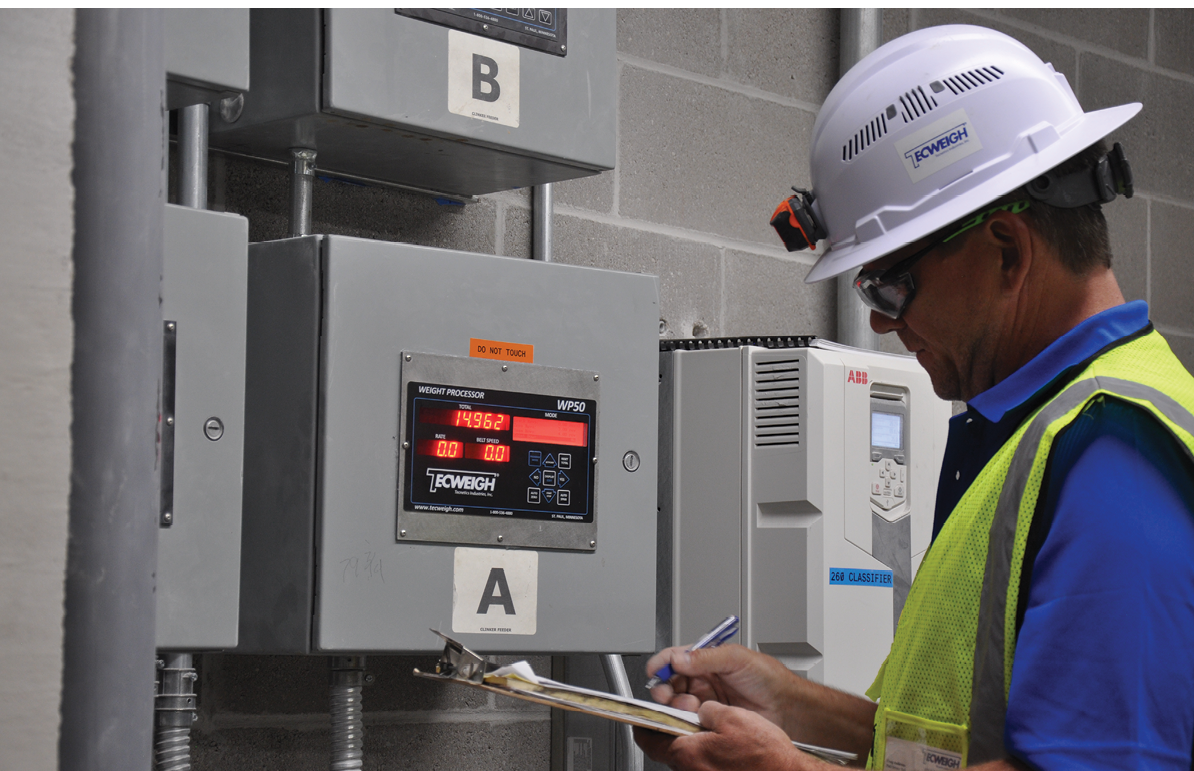
Belt scales, and scaling systems in general, are one of those crucial elements to mining, but also not one that is thought about as often and as intensely as others.
Minnesota-based Tecweigh is well aware of that – in fact, the company has built its business on helping clients keep their operations running efficiently, accurately and in compliance despite changes to infrastructure components, feed rates and other critical factors.
NAM took a few of its burning questions to division manager Sheldon Shepherd, a 30-year-plus veteran of the belt scale sector and 10-year Tecweigh team member, who said that, while traditional mining operations in the industry have well-established oversight programs, often there is a lack of ownership over the scaling systems. At the same time, automation and key performance indicators (KPIs) are driving a need for more accurate scale output and performance.
In terms of growing technology, Shepherd points out that there have been several advancements helpful in this area, including flyover surveys and the use of drones. Despite that, the need for accurate and, more importantly, real-time production data is more important than ever before, and the best way to get that is with an accurate scale system.

So, what goes wrong? Most often, Shepherd said, the pitfalls are common adjustments to components, but then the scaling adjustment in parallel is not completed, and sometimes is not considered at all. For example, replacing belts or idlers on a conveyor belt system, while a typical replacement, can lead to significant inaccuracies in scales not calibrated to match the work performed. Moreover, simple maintenance can also set the calibration of a scaling system askew.
Shepherd pointed out that, just as the pitfalls are common, the rectification of them – proper installation and maintenance as well as record keeping is key to keeping uptime high and the entire infrastructure moving harmoniously.
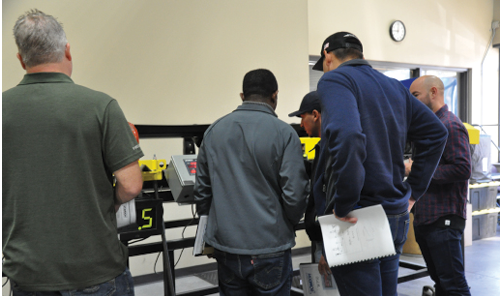
at its headquarters ofice.
The avenue to that success is multi-pronged: first, to assign ownership over these functions. Having a person whose duties include the balance between the belts and the scales will ensure optimum works for the entire stream of production. Second is to maintain the best records possible, as when figures are awry, it will be quickly evident.
Finally, proper training is key. Shepherd noted that, at some facilities, training is handed down from person to person on an individual basis; that, however, can create missing details or even incorrect processes being shared as staff come and go. That’s not to say a company-centric training program or service contract is imperative – though it is a great segue into Tecweigh’s regularly scheduled training classes.
Held at the company’s headquarters twice annually and at other times on demand (Shepherd stressed clients can just give them a call with dates and they will be waiting to transport them from the airport upon touchdown), the training is a mixture of hands-on troubleshooting and process instruction and classroom-style education where attendees can share experiences as well as best practices.
Proper upkeep with scales on a long-term basis requires all of those elements together, but it all begins with routine calibration and keeping watch on the system so it can do its best work for the site. As he noted, it is just not possible in modern mining to have someone come in every few months and perform maintenance and calibration.
“Mines are depending on this data,” Shepherd said, adding that they need it for many more reasons today than ever, and that many more people upstream than ever require these important statistics, and generally, they need it fast. With such an important asset in play, doing these things to improve accuracy can offer stories of returns for many years to come.